There is a pervasive misconception floating around the internet, in dental offices, and even in some surgical consultations: the idea that BiMax surgery exists solely to fix a bad bite or stop someone from snoring at night. It is a frustratingly narrow view of one of the most transformative surgical procedures available in modern reconstructive and aesthetic medicine. The truth is far more fascinating, and if you have been told otherwise, this article is long overdue.
BiMax, short for bimaxillary osteotomy, also called double jaw surgery, is a procedure that simultaneously repositions both the upper jaw (maxilla) and the lower jaw (mandible). When performed by a skilled surgeon, it does not merely correct dental occlusion. It architecturally redraws the proportions of your face. The jawline changes. The profile transforms. The midface lifts. The chin projects. Cheekbones appear more defined. The neck-to-chin angle becomes sharper. In short, BiMax is among the most comprehensive facial transformation surgeries a person can undergo — and it achieves all of this from the inside out, without a single external scar.
This is the definitive guide to what BiMax surgery actually is, who it is for, how it works, and why Istanbul, Turkey. The clinic of Assoc. Prof. Dr. Burak Sercan Erçin has become one of the leading destinations in the world for patients seeking this life-altering procedure.
What Is BiMax Surgery, Really?
Bimaxillary osteotomy is a form of orthognathic (jaw-correcting) surgery in which the surgeon cuts and repositions both jaws during a single operative session. The upper jaw is addressed through a procedure known as a Le Fort I osteotomy, while the lower jaw is corrected via a bilateral sagittal split osteotomy (BSSO). The two procedures performed together constitute the BiMax, and that combination is precisely what makes it so powerful.
Unlike single-jaw surgeries that only address the upper or lower jaw in isolation, BiMax allows the surgeon to balance both jaws in relation to each other and to the rest of the face simultaneously. This opens up an entirely different level of precision. The surgeon does not simply move one jaw forward or backward — they orchestrate the spatial relationship between the two jaws, the chin, the nose, the cheekbones, and the overall facial skeleton in a single, coordinated surgical plan.
The procedure is performed entirely through incisions made inside the mouth, which means there are no visible scars on the skin. The bones are stabilised using titanium plates and screws, which are medically safe and, in most cases, left in place permanently. Modern BiMax surgery is planned using three-dimensional digital imaging, virtual surgical planning (VSP) software, and, in advanced cases, custom-designed surgical splints that guide the bone repositioning with extraordinary precision.
The Misconception That Needs to End
Ask ten people on the street what double jaw surgery is for, and the majority will tell you it is about fixing an underbite, an overbite, or sleep apnoea. These are legitimate reasons for the surgery — but they represent only a fraction of why patients pursue BiMax. The surgical community, and certainly the aesthetic surgery world, has moved well beyond this reductive view.
Here is the reality: the jaws are the scaffolding of the face. The position of the maxilla determines how the midface sits — whether the cheeks appear hollow or full, whether the nose projects naturally or looks pinched, and whether the lips rest in a naturally pleasant position. The position of the mandible controls the strength and definition of the lower third of the face, the jawline’s angle, the prominence of the chin, and the clarity of the cervicomental angle — that coveted sharpness between the neck and chin that no amount of diet or facial exercise can reliably produce if the underlying bone is not positioned correctly.
When both jaws are repositioned in perfect harmony, the effects ripple across the entire face. Patients who undergo BiMax often report that people around them notice a dramatic change but cannot quite identify what was done. They describe it as looking like a better, sharper, more harmonious version of themselves — which is precisely the goal of the best aesthetic surgery.
This is not incidental. Skilled surgeons like Dr. Burak Sercan Erçin approach BiMax as a facial architecture procedure first, and a functional correction second. Both outcomes are achieved simultaneously, but the framing matters: you are not just fixing how your teeth meet. You are redesigning the proportions of your face.
How BiMax Transforms Facial Proportions
To understand the aesthetic power of BiMax, it helps to think of the face as being divided into thirds. The upper third extends from the hairline to the brow. The middle third runs from the brow to the base of the nose. The lower third encompasses everything from the base of the nose to the chin. Balanced, attractive faces tend to have relatively equal thirds — and the lower third, where both jaws reside, is directly under the surgeon’s control during BiMax.
The Upper Jaw (Maxilla) and the Midface
Moving the maxilla — even by just a few millimetres — has profound upstream effects. Advancing the upper jaw creates a more pronounced midface, fuller-looking cheekbones, and a more defined nasolabial region. It can also subtly rotate the nasal tip and improve lip support, creating a more youthful and proportionate appearance. For patients who have a deficient or recessed midface, maxillary advancement through BiMax can produce results that rhinoplasty, fillers, or cheek implants simply cannot replicate — because those approaches do not address the underlying skeletal deficiency.
The Lower Jaw (Mandible) and the Jawline
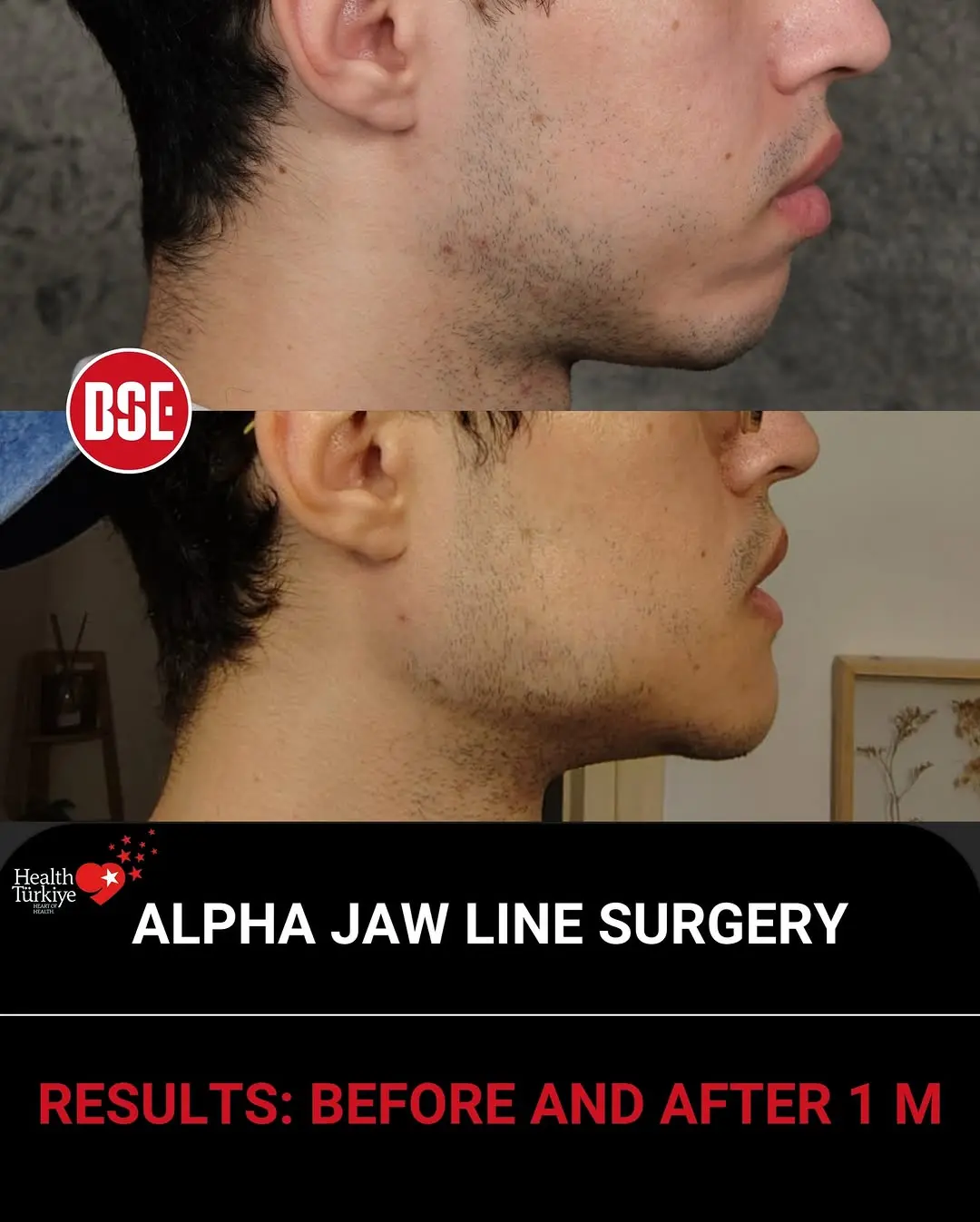
The mandible is the single greatest determinant of jawline definition and chin projection. Repositioning it changes the entire lower facial silhouette. A recessed mandible (retrognathia) creates the appearance of a weak chin, a heavy neck, and a poorly defined cervicomental angle — what is sometimes colloquially described as a “weak jaw.” Advancing the lower jaw through BiMax sharpens the jawline, increases chin projection, and improves the neck-to-chin angle dramatically. The patient leaves with a face that reads as stronger, more symmetrical, and more definitively proportioned.
The Chin as a Finishing Touch
In many BiMax cases, the surgeon will also perform a genioplasty — a surgical reshaping of the chin bone — as part of the same procedure. This additional step allows the chin to be moved not only forward or backward but also vertically, giving the surgeon fine-grained control over the exact length and projection of the lower face. Combined with the repositioning of both jaws, genioplasty as part of a BiMax plan allows for remarkably precise facial sculpting.
Symmetry
One of the most underappreciated benefits of BiMax is its ability to address facial asymmetry. Because both jaws are moved independently and three-dimensionally, the surgeon can correct rotational and vertical asymmetries that give the face an uneven appearance. The result is a face that appears not just transformed, but more symmetrical — and symmetry is perhaps the most universally recognised component of what humans perceive as facial attractiveness.
Who Is a Candidate for BiMax Surgery?
BiMax surgery is not a procedure reserved for the most extreme jaw deformities. Patients from a wide range of backgrounds and with varying degrees of skeletal discrepancy pursue it, motivated by functional concerns, aesthetic goals, or both.
Functional Candidates
Patients who may be functionally indicated for BiMax include those experiencing significant malocclusion (overbite, underbite, crossbite, or open bite), chronic temporomandibular joint (TMJ) pain attributable to jaw position, obstructive sleep apnoea with a skeletal component, difficulty chewing or speaking clearly due to jaw misalignment, and facial trauma that has healed in an anatomically suboptimal position.
Aesthetic Candidates
From an aesthetic standpoint, ideal BiMax candidates include individuals with a recessed chin or lower jaw that creates an undefined jawline, patients with a deficient midface who want improved cheekbone definition without implants, those with significant facial asymmetry, individuals who feel that their profile lacks definition or harmony, and patients who have completed orthodontic treatment but remain dissatisfied because their underlying skeletal structure has not been addressed.
The Orthodontic Component
In most cases, patients undergoing BiMax for functional reasons will have a course of orthodontic treatment both before and after surgery. Pre-surgical orthodontics aligns the teeth within their respective jaws and sets the dental arches up for the new bite that surgery will create. Post-surgical orthodontics fine-tunes the bite over the months following the procedure. For purely aesthetic patients with already acceptable occlusion, this orthodontic component may be reduced or modified — a nuance that should be discussed in detail during consultation.
Age Requirements
BiMax is generally not performed on patients whose facial skeleton is still growing. For female patients, skeletal maturity is typically reached between 16 and 18 years of age; for male patients, between 18 and 21. Most surgeons prefer to operate on patients who have reached full skeletal maturity, as operating on a growing face risks relapse.
The BiMax Surgical Procedure: Step by Step
Understanding what actually happens during a BiMax operation helps demystify the procedure and underscores why surgeon experience matters so profoundly.
Preoperative Planning
Modern BiMax surgery begins long before the patient enters the operating theatre. Three-dimensional CT scans of the skull are used to create a precise digital model of the patient’s facial skeleton. Virtual surgical planning software allows the surgical team to simulate the planned bone movements in three dimensions, predict the resulting facial changes, and design custom surgical splints — often called wafers — that will guide the bone into its new position during surgery with precision measured in fractions of a millimetre.
Anaesthesia
BiMax is performed under general anaesthesia and typically takes between two and four hours, depending on the complexity of the plan and whether adjunct procedures such as genioplasty are included.
The Le Fort I Osteotomy (Upper Jaw)
The surgeon begins by making incisions inside the upper lip, providing access to the upper jawbone. The maxilla is carefully separated from the surrounding facial skeleton using specialised instruments, allowing it to be moved in any three-dimensional direction — forward, backward, upward, downward, or rotated. Once the bone is in its planned position, it is secured with titanium plates and screws.
The Bilateral Sagittal Split Osteotomy (Lower Jaw)
Working through incisions inside the lower lip, the surgeon makes precisely planned cuts through the lower jaw on both sides. This allows the tooth-bearing segment of the mandible to be advanced, set back, or rotated as required. Again, the repositioned bone is fixed in place with titanium hardware.
Genioplasty (If Included)
If a genioplasty is part of the surgical plan, the chin bone is cut and repositioned at this stage, adding a further dimension of control over the final aesthetic result.
Closure
All incisions are made entirely inside the mouth and are closed with dissolvable sutures, leaving no external marks on the skin.
Aesthetic vs. Functional Benefits: A Dual Outcome
One of the most compelling aspects of BiMax is that it delivers both aesthetic and functional benefits from a single surgery. Patients do not have to choose between looking better and feeling better — they get both.
Functional Benefits include: improved bite function and the ability to chew a full range of foods without difficulty, relief from TMJ pain and jaw tension, correction of sleep apnoea where skeletal anatomy was a contributing factor, clearer speech, and improved ability to breathe through the nose.
Aesthetic Benefits include: dramatically improved facial profile and facial balance, stronger and more defined jawline, improved chin projection, enhanced midface definition, correction of facial asymmetry, more youthful and natural-appearing lip support, and a sharper, more aesthetically pleasing neck-to-chin angle.
For many patients who seek BiMax primarily for aesthetic reasons, the functional improvements are a welcome bonus. For those who initially came through the door for functional reasons, the aesthetic transformation is frequently among the most life-changing aspects of their experience.
BiMax vs. Other Jaw Surgeries: What’s the Difference?
Patients exploring jaw surgery often encounter a range of related terms and procedures. Here is a clear breakdown.
Single-jaw surgery (Le Fort I alone or BSSO alone) addresses only one jaw at a time. This may be appropriate when a significant discrepancy exists in only one jaw, but it offers less versatility and typically delivers less dramatic aesthetic results than BiMax, since only half of the facial skeleton is being optimised.
Genioplasty addresses only the chin and does not move the upper or lower jaw. It is a useful adjunct to BiMax but cannot achieve the wholesale facial transformation that repositioning both jaws provides.
SARPE (Surgically Assisted Rapid Palate Expansion) widens a narrow upper jaw but does not move it in three dimensions. It is typically performed for patients with dental crowding or crossbite attributable to a narrow arch.
BiMax is the most comprehensive of all jaw surgery options, addressing both jaws simultaneously in three dimensions. It offers the greatest degree of surgical planning precision and the broadest range of aesthetic and functional corrections available through a single procedure.
Why “Doing Both at Once” Matters
Patients sometimes ask why both jaws need to be addressed simultaneously rather than sequentially. The answer lies in interdependence. The position of the upper jaw directly dictates the ideal position of the lower jaw, and vice versa. When a surgeon moves only one jaw, they are working with a fixed reference point — but if both jaws are suboptimal, that reference point is itself incorrect. Addressing both jaws together allows the surgeon to establish the ideal position of the entire lower facial skeleton from scratch, using the skull base as the reference rather than one flawed jaw as the guide for another. This produces more accurate, more stable, and more aesthetically complete results. It is also why BiMax, despite being a more involved procedure than single-jaw surgery, tends to produce dramatically superior outcomes in patients with complex skeletal discrepancies.
What to Expect During Recovery
Recovery from BiMax surgery is a significant commitment, and it is important to approach it with realistic expectations and thorough preparation.
The First Week
Swelling, bruising, and a degree of discomfort are expected immediately after surgery. The face will be notably swollen — sometimes dramatically so — for the first several days. Patients are typically hospitalised for one to two nights following the procedure. Diet is restricted to liquids and very soft foods. Pain is generally well-managed with prescribed medication, and most patients describe the discomfort as more pressure and tightness than sharp pain.
Weeks Two to Four
Swelling begins to reduce progressively, though it will not resolve fully for several months. Most patients are able to return to light daily activities and non-physical work within two to three weeks. The diet remains soft for approximately six to eight weeks while the bones consolidate.
Months Two to Six
The majority of swelling resolves during this period, and the aesthetic results of the surgery become increasingly visible. Bone healing consolidates further, and the patient gradually returns to a normal diet. Follow-up appointments monitor progress and, in functional cases, orthodontic adjustments begin or resume.
The Final Result
The complete, settled aesthetic result of BiMax surgery is typically visible around the twelve-month mark, when residual swelling has fully resolved and the soft tissues have adapted to their new skeletal positions. Most patients describe this stage as the moment they truly see what the surgery has done — and for the majority, the experience is profound.
Why Turkey Has Become the Global Hub for BiMax Surgery
Turkey has emerged as one of the world’s foremost destinations for surgical procedures of all kinds, and BiMax is no exception. Several factors converge to make Istanbul, in particular, an exceptionally attractive option for international patients.
World-Class Surgical Infrastructure
Turkish hospitals and specialist clinics are equipped with the latest surgical technology, including advanced imaging systems, virtual surgical planning software, and intraoperative tools that match or exceed the standards found in Western Europe or North America. The country has invested heavily in its medical infrastructure, and the results are evident.
Surgical Expertise and Volume
Turkish surgeons who specialise in maxillofacial and reconstructive surgery benefit from high patient volumes that build surgical experience at a rate that many surgeons in lower-density healthcare systems simply cannot match. High volume, when combined with genuine skill and academic rigour, produces exceptional surgical outcomes.
Cost Advantage Without Quality Compromise
It is widely acknowledged that the cost of BiMax surgery in Turkey is substantially lower than in the United Kingdom, Germany, the United States, or Australia — not because the quality is inferior, but because of differences in healthcare economics, operating costs, and currency valuations. Patients from abroad frequently report receiving care that exceeds what they could access at home, at a fraction of the price.
A Seamless Experience for International Patients
Istanbul is a major international hub with excellent flight connections from across Europe, the Middle East, North Africa, and beyond. Clinics catering to international patients have developed streamlined systems for remote consultation, surgical planning, travel coordination, accommodation, and postoperative support — making the entire experience far less daunting than many overseas patients initially anticipate.
Language and Communication
Istanbul’s top surgical clinics are well equipped to support English-speaking international patients throughout every stage of the process. From the initial video consultation to the surgical consent process, recovery instructions, and remote follow-up, dedicated patient coordinators bridge any language gaps and ensure that no detail is lost in translation. For a surgery as intricate and consequential as BiMax, clear communication is not a luxury — it is a clinical necessity, and the best Turkish clinics understand this deeply.
Why Choose Assoc. Prof. Dr. Burak Sercan Erçin for Your BiMax in Istanbul
When it comes to a surgery as complex and consequential as BiMax, the surgeon’s credentials, philosophy, and experience are everything. Assoc. Prof. Dr. Burak Sercan Erçin stands out in Istanbul’s competitive surgical landscape for a combination of reasons that matter deeply to patients considering this procedure from abroad.
Academic Excellence and Reconstructive Foundation
Dr. Burak holds a qualification diploma from EBOPRAS, one of Europe’s most rigorous examining bodies in plastic and reconstructive surgery. He currently serves as a plastic surgeon at Pendik Medical Park and as a faculty member in the Plastic, Reconstructive and Aesthetic Surgery Department at Bahçeşehir University. His academic standing is not a ceremonial title — it reflects a genuine commitment to evidence-based practice, continued learning, and the kind of surgical rigour that separates excellent surgeons from good ones.
Training Alongside World-Leading Microsurgeons
During his medical residency, Dr. Burak worked alongside globally recognised figures in reconstructive surgery, including Dr. Pedro Cavadas — widely regarded as one of the most talented reconstructive microsurgeons in the world. This exposure to complex, high-stakes reconstruction at the highest level of the field has shaped Dr. Burak’s approach to facial surgery in ways that are difficult to overstate.
Over 15 Years of Experience and 6,000+ Operations
With more than a decade and a half of clinical experience and over six thousand successful operations behind him, Dr. Burak brings a depth of hands-on surgical expertise that gives patients genuine confidence. His case history spans the full spectrum of reconstructive and aesthetic surgery — from hand microsurgery and facial paralysis correction to breast reconstruction and facial aesthetic procedures — and his work has been covered by major Turkish media outlets including the Anadolu Agency.
A Holistic, Aesthetic Surgical Philosophy
What distinguishes Dr. Burak’s approach to facial surgery — and BiMax in particular — is his insistence on treating the face as a whole. He does not approach jaw surgery as a mechanical problem to be solved; he approaches it as an artistic and anatomical challenge to be mastered. The goal is not just a corrected bite or a resolved airway. It is a face that is more beautiful, more balanced, and more expressive of the person inside it.
Proven International Patient Experience
Dr. Burak’s clinic has a well-established track record with international patients. His team is accustomed to managing the full patient journey remotely — from initial consultation via video call, through digital surgical planning, to surgery, recovery support, and long-distance follow-up. Patients have travelled from the United Kingdom, Germany, the Middle East, and beyond to receive treatment, and the consistency of their outcomes and experiences speaks for itself.
Frequently Asked Questions About BiMax Surgery
Is BiMax surgery permanent?
Yes. The bones are repositioned and fixed with titanium hardware. Barring significant relapse — which is uncommon in well-planned cases — the new jaw positions are permanent. The aesthetic and functional improvements are lasting.
Will my face look natural after BiMax?
This depends significantly on the surgical plan and the surgeon’s aesthetic judgment. In well-planned BiMax cases, the results look entirely natural — because the surgery is working with your own anatomy, improving its proportions rather than superimposing artificial features. Patients often describe looking like a better version of themselves rather than a different person.
How is BiMax different from getting jaw implants?
Jaw implants add volume to the chin or mandible using artificial materials placed over the existing bone. BiMax repositions the actual bone. The two approaches are fundamentally different. BiMax can address issues that implants cannot — such as bite problems, airway function, and complex asymmetry — and many surgeons argue that for patients with genuine skeletal deficiency, repositioning the bone produces more natural and durable results than implants.
How long do I need to stay in Istanbul after BiMax?
Most international patients plan to remain in Istanbul for approximately seven to ten days following surgery before flying home. The first postoperative check is typically conducted before departure, and follow-up appointments thereafter can often be conducted remotely, with occasional in-person visits if required.
Is BiMax painful?
Discomfort is expected in the first week to ten days following surgery. However, modern surgical techniques, anaesthetic practice, and postoperative pain management protocols mean that the experience is substantially more manageable than many patients anticipate. The most common descriptions from post-operative patients are swelling, pressure, and tightness — rather than sharp or severe pain.
Can BiMax be combined with other procedures?
Yes, and in many cases it is. Genioplasty is frequently performed as part of the same operative session. Some patients also choose to combine their BiMax with rhinoplasty (nose reshaping) to address the full facial profile in a single anaesthetic episode, maximising results and minimising overall recovery time.
How do I know if I am a candidate?
The only way to know with certainty is through a consultation with a qualified surgeon. For international patients, this typically begins with a video consultation and the submission of photographs and imaging studies. Dr. Burak’s team is experienced in conducting these remote assessments and will provide an honest, thorough evaluation of whether BiMax is appropriate for your anatomy and goals.
Ready to Explore What BiMax Can Do for Your Face?
BiMax surgery is not for everyone — but for the right patient, it is arguably the single most transformative procedure available in the entire field of facial surgery. It addresses the foundation. It corrects the scaffold. And when everything is repositioned in perfect, planned harmony, the face that emerges is not just corrected — it is revealed.
If you have been told that double jaw surgery is only about bites and breathing, you have been sold short. The full story is one of facial architecture, aesthetic precision, and the power of bone — the most permanent canvas a surgeon can work with.
Assoc. Prof. Dr. Burak Sercan Erçin and his team at their Istanbul clinic are ready to walk you through your options with honesty, expertise, and a genuine commitment to achieving the result you deserve. The first step is a consultation.
Reach out today via the contact page at buraksercanercin.co or message directly via WhatsApp to begin your journey.