
This article was written by Assoc. Prof. Dr. Burak Sercan Erçin and is based on clinical experience. A specialist in Plastic, Reconstructive and Aesthetic Surgery; prepared in accordance with current medical literature and personal surgical data. A consultation is recommended before making any medical decisions.

Why Is Bra Sizing So Frustrating?
Getting a great bra fit is surprisingly hard – most women struggle with it! In fact, up to 85% of women end up wearing the wrong bra size. Why is this so common? There are several factors:
Asymmetry Is Normal: Almost every woman has breasts that aren’t exactly the same size or shape. About 90% of women have at least a 10–20% difference in breast volume between sides. A standard bra assumes perfectly symmetrical breasts, so one breast often “spills” out of its cup or sits loose if the other is larger.
Your Cycle Affects Your Bra Fit: Hormonal changes during the menstrual cycle can noticeably swell breast tissue. On average, breast volume changes by ~76 mL (about 13%) from the smallest to the largest point in a cycle. A bra that fit last week may suddenly feel too tight (or too loose) this week. Even daily weight fluctuations or water retention can make a band or cup feel off.
Varied Breast Shapes: Breasts come in many shapes – round, teardrop, conical, bell-shaped (papaya-shaped), etc. A simple measurement can’t fully capture these three-dimensional differences. For example, very “full-on-bottom” (teardrop) breasts may spill out of a shallow cup but leave space at the top. Irregular shapes mean one-size calculators can mis-predict the best style.
Wired Bras Leave No Room for Error: Bras with underwire require precise fit. If the band is too loose, the underwire will slide away from the breast fold. If the band is too tight or the cup too small, wires will pinch or dig into tissue. There’s very little give in wire construction – a slight sizing error becomes painfully obvious.
All of these factors mean finding the “right” size by guesswork is nearly impossible. Even within one country, bra sizing is not standardized.. A 34C in one brand may fit like a 34D in another. That’s why professional fitters emphasize multiple criteria (band, cup, straps, underwire and gore fit). In short, bra sizing frustrates us because human bodies are complex and garment labels can’t adapt automatically. A bra fit calculator aims to simplify this by using your actual measurements and some smart rules, but understanding these real-world quirks helps explain why sizes still vary.

Adaptive Fit: Elastic Designs That Breathe with You
Modern bras increasingly use stretch fabrics and adaptive designs to conform to your body as it moves. Four-way stretch materials (think spandex blends) allow the cup and band to expand and contract with your breathing and movement, so you’re not fighting a rigid shape. Many “athleisure” or wireless bras feature mesh panels or moisture-wicking fabrics to keep you cool and allow airflow. The idea is that the bra should flex with you rather than feel like restrictive armor. These adaptive bras typically have a wide elastic underband and flexible side panels that comfortably hug your body – even if you gain or lose a bit of weight. In other words, the bra feels more like a second skin than a corset.
Support Where You Need It Most: The Band
The underband of a bra is its workhorse – it carries most of your breast weight, not the straps. When fitted properly, the band should be snug and level around your ribcage. A firm underband prevents the straps from bearing too much weight, which in turn reduces shoulder and back strain. In fact, experts advise that most support should come from the band (and underwire) rather than the shoulders. A band that is too loose will ride up in the back, while one that’s too tight will dig in or feel constricting. When trying on a bra, check that you can slide only two fingers under the band comfortably and that it stays parallel to the floor. If your straps are carrying the weight (or if your back aches), the band fit needs adjustment. Remember that bands stretch out over time – it’s good practice to re-measure and re-fit yourself every few months as your body (and your bra) change
Cups That Reflect Real Bodies
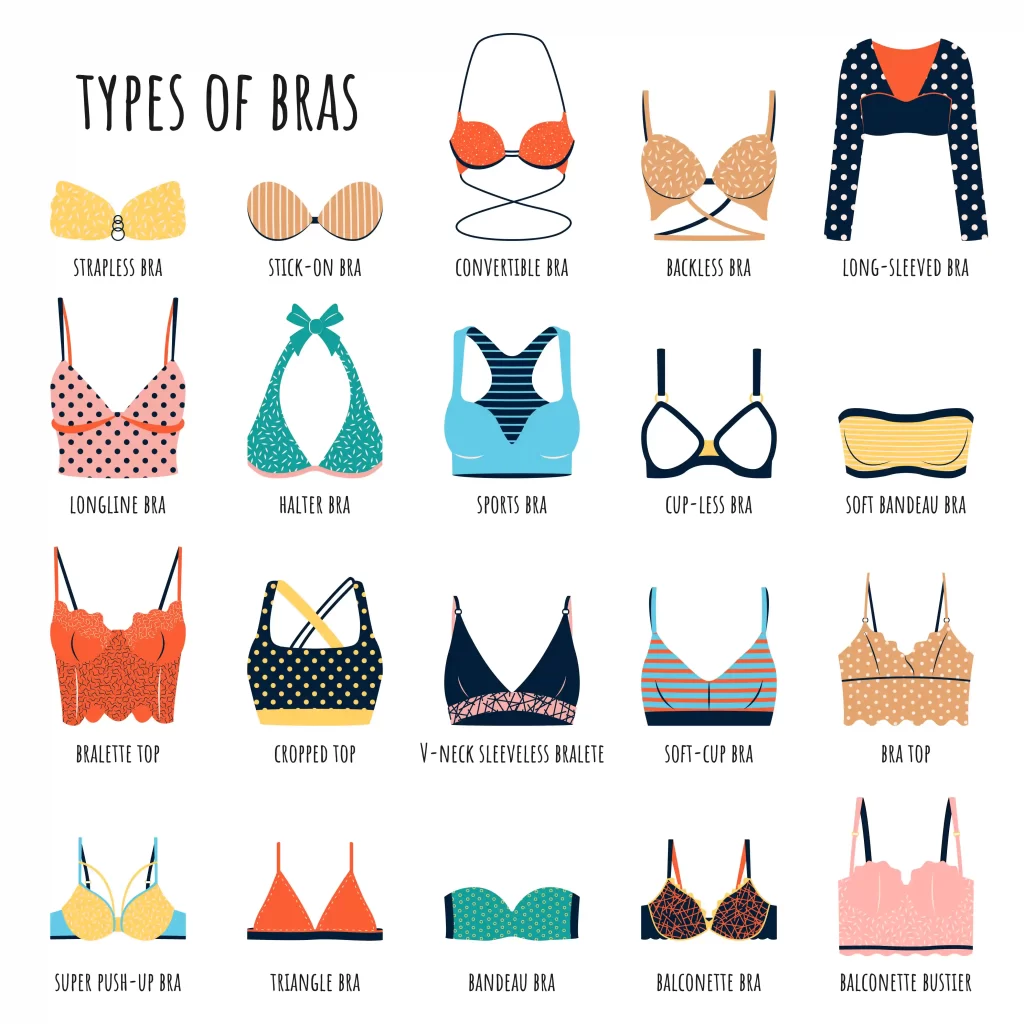
Bras today come in a dazzling range of cup sizes and shapes to match “real” women’s bodies. No longer are A–D cups the only mainstream sizes – many brands now carry DD/E, F, G, and beyond, with corresponding bands (28–50+). Some lines even have “half-cup” increments or extended sizes for very large or very small frames. These expanded size ranges help more women find a close fit. In addition, designers are using multi-part cups and seamed constructions to better mold to a variety of breast profiles. The key is that a good fit should look natural, not forced; a cup should encapsulate the breast without flattening it or bulging oddly. A calculator can suggest a size, but the right cup will ultimately match your tissue distribution.
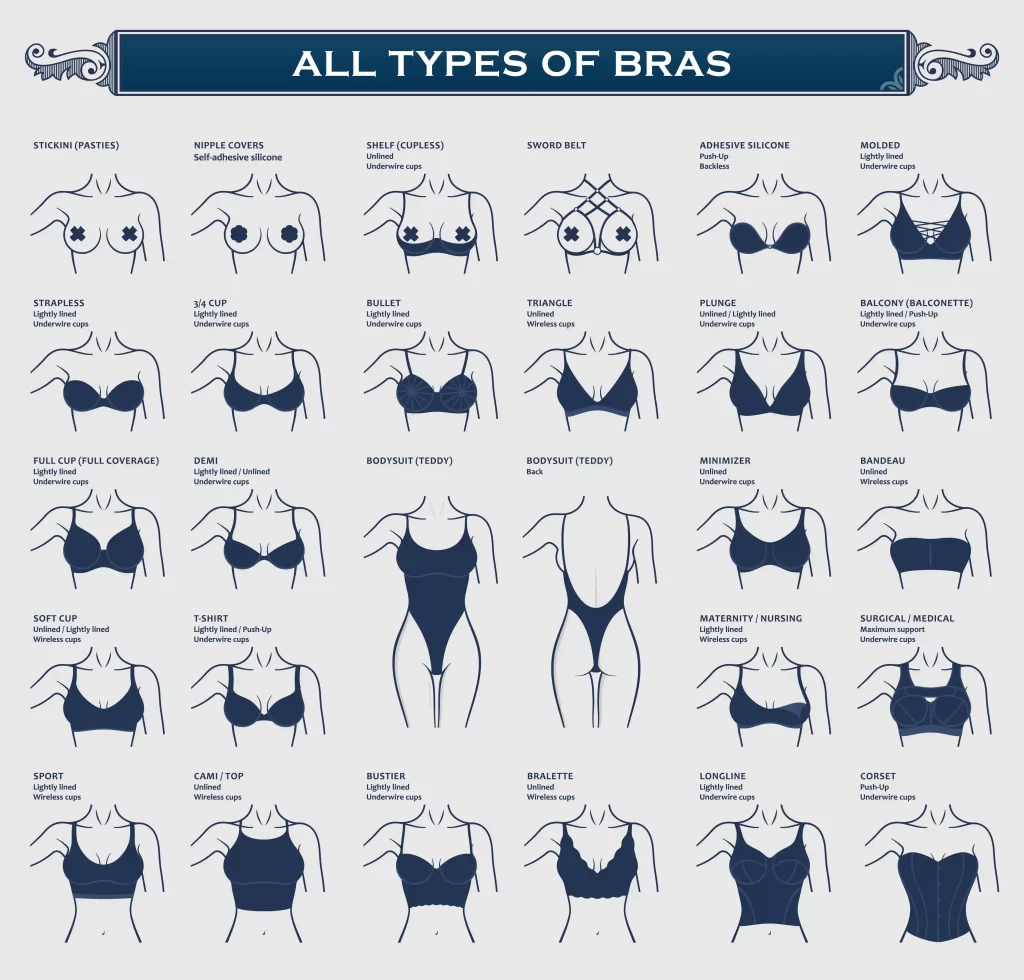
Wider, Softer, Adjustable Straps
Don’t underestimate bra straps! Narrow straps can dig painfully into shoulders, especially on fuller busts. Many bra-fit experts recommend wide, padded straps for extra comfort and support. Wider straps distribute weight across a larger area of the shoulder, reducing pressure points. Think of how a backpack strap feels versus a thin cord – the wider one feels lighter. Softer strap padding also prevents red marks. Importantly, straps should be adjustable, so you can fine-tune the lift. In a too-small bra, even wide straps won’t save you; but in the right size, adjustable straps simply let you dial in support. So when a bra is too tight in the band, women often rely on straps to hold it up – a recipe for numb, sore shoulders. The ideal: band and cups fitted, straps just snug enough to keep the bra secure.
Wireless by Choice, Not Compromise
Gone are the days when going wire-free meant “giving up” support. Today’s best wireless bras use clever design to provide lift without a metal wire under each breast. For example, many wireless bras have strong molded cups, wider stretch bands under the bust, and side panels that encapsulate the breast. Soft inner slings or cross-over fabrics inside the cup can lift tissue upward. According to Spanx, comfortable wireless bras use “features like molded cups, stretch bands, and wide straps” to maintain shape and support. In practice, a good wireless bra can minimize poking or poking and feel like a light, smooth layer – ideal for lounging or daily wear. The bottom line: choosing wireless should not mean settling for sag or discomfort. With today’s materials, women can have wire-free comfort and a flattering silhouette.
How to Measure at Home
Getting accurate measurements is the first step, and you can do it yourself with a soft tape measure. Follow these steps:
- Band measurement: Put on a non-padded bra or go braless. Wrap the tape measure snugly around your torso directly under your breasts, where the band sits Ensure the tape is level around your back and parallel to the floor. Don’t pull it too tight – you want a snug but comfortable tension. Note this number in inches (round to the nearest even number if needed). This is your approximate band size.
- Bust measurement: Next, measure around the fullest part of your breasts.. Keep the tape level and straight – it should go over the nipple area and around the back. Try to relax your arms and stand naturally. This measurement is your bust size.
- Calculate your size: Subtract the band measurement from the bust measurement. Each inch of difference typically corresponds to one cup letter (for example, 1 inch = A cup, 2 inches = B, 3 = C, etc.). If your bust is 3 inches larger than your band, you’d start with a C cup. Of course, exact sizing can vary by brand, but this calculation is a traditional “starting point.”
For example, a 32-inch band and a 36-inch bust give a 4-inch difference (usually about a D cup in many charts). Important: These measurements can change over time. After exercise, during pregnancy, or around your period, you might measure differently. Experts suggest re-measuring every 6 months or so. If you don’t have a tape measure, you can even use a piece of string and then measure that against a ruler – accuracy is key.
How to Put On a Bra: “Scoop and Swoop”
Putting your bra on correctly is just as important as measuring it. A common technique is called the “scoop and swoop.” Here’s how to do it step-by-step:
- Step 1: Fasten your bra band first (usually at the back) and adjust the straps so they’re somewhat loose. Ensure the band is level all around your torso.
- Step 2: If possible, bend forward at the waist so that your upper body leans over. (This step helps gravity pull your breasts into the cups.)
- Step 3: Using one hand, gently pull the loose fabric of the cup toward the side of your breast while scooping breast tissue from under your armpit or side into the cup. Think of guiding all the breast tissue forward and downward.
- Step 4: Stand up straight and adjust the breast in the cup by smoothing any folds or bumps. You can also use your fingers to push any remaining tissue upward into the top of the cup.
- Step 5: Repeat on the other breast. Finally, tighten the shoulder straps to lift (not pinch) – you should still be able to insert a finger under each strap comfortably.
Doing the “scoop and swoop” ensures that all migrated breast tissue (often pushed into the armpits or back by previous bras) is now in the cups. This simple routine can make a huge difference: the bra will sit correctly, and the underwire will encircle the breast properly.
Figure: A woman adjusting her bra straps for comfort. Properly lifting and positioning the breasts in the cups (through techniques like scoop-and-swoop) helps the bra support you as intended.
Why the Scoop and Swoop Matters
Performing the scoop-and-swoop can improve overall bra fit dramatically. By gathering all your breast tissue into the cups, you ensure that the bra’s support elements (underwire, band and straps) are working on the right volume. The benefits include:
- Maximizing support: With all tissue in place, the band and cups can hold you up rather than letting breast fat rest on the torso or shoulders. This often means better lift and less strain. A study note explains that scoop-and-swoop “improves overall bra fit, positioning the underwires, band, and cups so that the breasts are properly lifted and supported”
- Smoothing bulges: Tissue that had “escaped” to the sides or back is pulled into the cups, reducing back/side bulges and giving a smoother silhouette. Many women report that after scooping-and-swooping, the back looks leaner and the breasts look fuller (but more contained).
- Accurate sizing over time: Interestingly, regularly doing this can reveal that you may need a larger cup size. One source noted that women with a C cup or larger sometimes find themselves going up a cup size over a few months of proper fit, because the bra finally contains all the tissue that was previously unaccounted for.
In short, skip the scoop and swoop at your own risk: you might be underfilling your bra and underestimating your size. When done correctly, this simple move makes your bra do its job better, leading to greater comfort (no spillage or pinching) and more flattering shaping.
What to Check When Trying on a Bra
Once you have the bra on (band fastened, scoop and swooped), it’s time for the “fit test.” As you move around, consider these checkpoints:
Band Fit: Look in a mirror from the side and back. The band should be straight and level (parallel to the floor). If it rides up in the back, it’s too loose (or the band size is too big). You should feel firm pressure under your bust. A good rule of thumb is the “two-finger” check: you should be able to comfortably slide only two fingers under the band at the front (snug but not stabbing)
Cup Fit: The fabric of each cup should lie flat against your breast without wrinkles or gaps. There should be no bulging (breast tissue spilling over the top, sides, or bottom) or wrinkling of the cup material. If the outer edge of the cup is digging in or the top edge is gaping, the cup may be too small or the wrong shape for you.
Center Gore: This is the piece of fabric between the cups. It should sit flat against your sternum (chest bone). If the gore is lifted off or digging into you, try a different size or style; it’s a sign the band might be too tight or the cups too small.
Straps: Adjust the straps so they feel snug but not pinching. With the band doing most of the work, straps should not slide off your shoulders nor dig in painfully. If the straps feel loose even at the highest setting, the band is likely too big. If they are maxed out and still digging, the band may be too small or the cups too big.
Figure: A bra-fitting chart from a 2021 study, illustrating common fit problems and improvements. Note how a properly fitted bra (right side) eliminates issues like gaping cups, ride-up band, digging straps, underwire overflow, and wrinkles.
If most of these checks pass, you likely have a good fit. Don’t be discouraged if you have to try multiple brands or sizes – remember, up to 25% of women opt for custom or specialty bras due to unique fit issues. A bra fit calculator can point you in the right direction using your measurements, but always try on and test the bra yourself with the above checklist. And keep in mind, different bras (sports vs. T-shirt vs. lace) will fit differently, so always re-evaluate when you try a new style.
Breast Implants
Breast implants or augmentations will significantly change your bra size and shape. After surgery, many women find they need a larger band or cup size. For example, a patient who was a small A/B before augmentation may now need C/D cups. It’s important to refit your bras after implants.

This content was written by Assoc. Prof. Dr. Burak Sercan Erçin in line with clinical experience and current medical literature. It is intended for general informational purposes only and does not constitute medical advice. A personal consultation with Dr. Erçin is recommended for individual assessment.
Faculty Member · Bahçeşehir University
Graduate of Ege University Faculty of Medicine, Assoc. Prof. Dr. Erçin completed advanced fellowships at Tampa General Hospital (USA) under Dr. Deniz Dayıcıoğlu in breast reconstruction and burn surgery, and at the clinic of Dr. Pedro Cavadas in Valencia, Spain in reconstructive microsurgery. After passing the EBOPRAS examination in 2018, he joined Bahçeşehir University as a faculty member and continues his private practice on Bağdat Avenue, Istanbul, specialising in face, breast and body aesthetics alongside complex reconstructive surgery.