This article was written by Assoc. Prof. Dr. Burak Sercan Erçin and is based on clinical experience. A specialist in Plastic, Reconstructive and Aesthetic Surgery; prepared in accordance with current medical literature and personal surgical data. A consultation is recommended before making any medical decisions.

If you’ve been researching facial rejuvenation and wondering why some facelift results look genuinely natural while others appear tight or overdone, you’ve likely already encountered the term deep plane facelift. This procedure represents one of the most technically advanced approaches to surgical facial ageing: one that addresses the underlying structural layers of the face rather than simply repositioning the skin. For patients researching facelift surgery in Turkey, understanding the distinction between a standard facelift and a deep plane facelift is often the critical first step toward making the right decision for their anatomy and long-term goals.
Facial ageing is a layered, three-dimensional process. Over time, it is not only the skin that descends and changes in quality — it is the deeper connective tissues, fat compartments, and ligaments beneath it. A deep plane facelift targets these structural changes at their anatomical source, which is why the outcomes it tends to produce appear more harmonious and longer-lasting than those achieved through skin-tensioning techniques alone. This article walks through everything a well-informed patient should know before considering this procedure.
What Is a Deep Plane Facelift?
A deep plane facelift is a surgical facial rejuvenation technique that releases and repositions the SMAS (superficial musculoaponeurotic system — the fibromuscular layer beneath the skin) together with the deeper facial ligaments and fat compartments. Unlike a traditional facelift, which primarily tightens the skin and may address the SMAS in a more limited way, the deep plane approach releases the key retaining ligaments of the face — including the zygomatic and masseteric ligaments, to allow the face’s deeper composite unit to be repositioned more comprehensively.
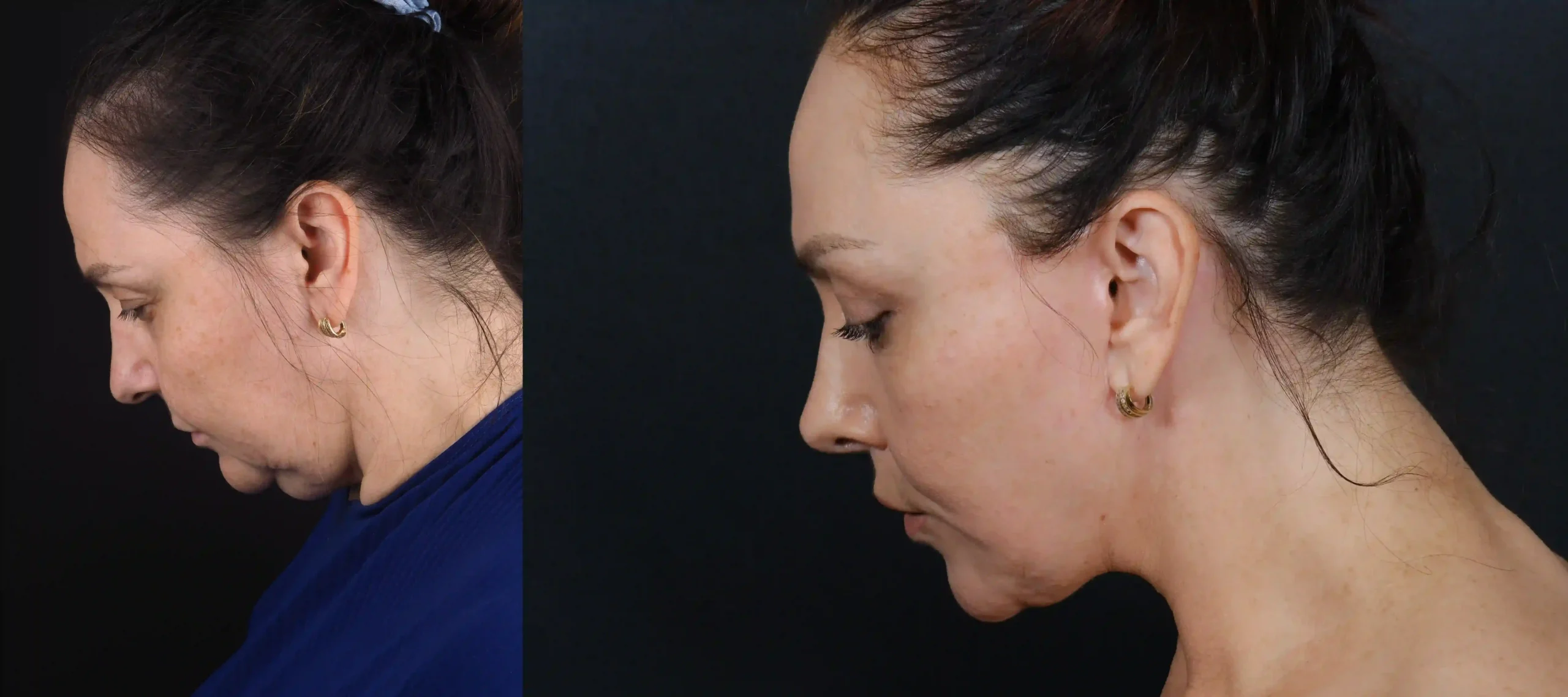
Because the skin and deeper tissues are elevated and moved as a single, connected unit, tension is distributed through the structural layer rather than the skin itself. This is one of the principal reasons deep plane facelifts are consistently associated with a more natural-looking outcome, reduced risk of visible scarring distortion, and longer-lasting results compared with skin-only or SMAS-plication techniques.
The procedure was first formally described by Dr. Sam Hamra in 1992 and has been refined substantially over the following three decades. Today, it is considered the gold standard for comprehensive facial rejuvenation in appropriately selected patients.
What Makes the Deep Plane Facelift Different?
Patients often encounter several procedure names when researching facelift options. A side-by-side comparison helps clarify what each approach does — and doesn’t — address:
| Feature | Mini Facelift | Traditional (SMAS) Facelift | Deep Plane Facelift |
|---|---|---|---|
| Tissues addressed | Skin only / superficial SMAS | Skin + SMAS layer | Skin + SMAS + deep ligament release |
| Ligament release | No | Partial | Yes |
| Best for | Early, mild laxity | Moderate ageing | Moderate to significant ageing |
| Results longevity | 3–5 years (generally) | 5–8 years (generally) | 8–12 years (generally) |
| Recovery period | Shorter | Moderate | Moderate to longer |
| Risk of “pulled” look | Higher | Moderate | Lower |
| Nasolabial fold improvement | Limited | Moderate | More significant |
These ranges are general estimates. Individual outcomes depend on anatomy, skin quality, age, lifestyle, and surgical technique. A personal evaluation is essential before drawing conclusions about which approach is appropriate for a given patient.
Who Is a Good Candidate for a Deep Plane Facelift?
Signs That May Point Toward This Procedure
The deep plane facelift tends to produce the most meaningful outcomes in patients who present with specific anatomical patterns of ageing. In consultations, the patients who benefit most typically share a recognisable combination of changes:
- Moderate to significant descent of the midface, resulting in flattened cheeks and prominent nasolabial folds (the lines running from the nose to the corners of the mouth)
- Jowling — the accumulation of soft tissue along and below the jawline
- Loss of a defined cervicomental angle (the junction between the neck and chin)
- Deep tear trough deformity and hollowing beneath the lower eyelids
- Skin quality that retains enough elasticity to benefit from repositioning rather than volume replacement alone
- Adults generally in the 45–70 age range, though candidacy is determined by anatomy, not age alone
- Non-smokers or patients who have successfully stopped smoking well in advance of surgery (smoking significantly impairs wound healing and vascular supply)
- Individuals in good general health with no uncontrolled medical conditions
Who May Not Be Suitable
Not every patient presenting for facial rejuvenation is an appropriate candidate for a deep plane procedure. Patients with very significant skin redundancy, poor skin elasticity, active autoimmune or connective tissue disorders, uncontrolled hypertension, or high perioperative risk may be better served by alternative approaches. Patients with early ageing and mild laxity may achieve excellent outcomes with less extensive techniques and shorter recovery periods. The only way to determine which category a patient falls into is through a thorough in-person clinical evaluation.
🩺 Dr. Burak’s Note
“One of the most consistent observations I make during initial consultations is that patients often arrive having mentally decided between procedures based on what they’ve read online. What I find, clinically, is that the correct approach is almost always determined by the anatomical presentation in front of me — not by a name. Some patients with early laxity achieve beautiful results through a more limited procedure. Others, who present with significant structural descent, need the deeper release to achieve the natural outcome they’re looking for. This assessment can only be done in person.”
The Procedure: What Happens Step by Step
Understanding what the deep plane facelift actually involves helps patients approach their decision with realistic expectations.
1. Pre-operative assessment and planning A thorough consultation includes facial analysis, discussion of the patient’s goals, medical history review, and — where needed — laboratory investigations. Photographs are taken and used for surgical planning. For international patients, this step can often be initiated remotely, with final confirmation of the surgical plan completed during an in-person visit to Istanbul.
2. Anaesthesia The procedure is typically performed under general anaesthesia. The anaesthetic protocol is determined by the anaesthesiologist in coordination with the surgical team based on the patient’s individual profile.
3. Incision design Incisions are carefully planned to follow the natural contours of the ear, extending into the hairline and along the posterior hairline behind the ear. When well-placed, these incisions are designed to be largely imperceptible once fully healed.
4. Flap elevation and dissection The surgeon elevates a composite flap that includes the skin, subcutaneous fat, and SMAS layer as a single unit. Dissection proceeds beneath the SMAS into the deep plane, identifying and protecting key neurovascular structures — including the facial nerve branches.
5. Ligament release The retaining ligaments of the midface are carefully released, allowing the composite flap to be repositioned vertically and posteriorly without tension on the skin surface. This is the defining technical step of the deep plane approach.
6. Repositioning and fixation The mobilised composite tissue is repositioned to restore a more youthful facial topography. Fixation is achieved through sutures placed in the deeper structural layers.
7. Skin redrapage and closure The skin is gently re-draped over the newly positioned deep tissue without tension. Any redundant skin is trimmed conservatively. Layered closure is performed with attention to minimising visible scarring.
8. Additional simultaneous procedures Depending on the patient’s anatomy and goals, the deep plane facelift may be combined with a neck lift (platysmaplasty), fat grafting to restore volume, upper or lower blepharoplasty (eyelid surgery), or brow lifting in a single surgical session. Combined procedures are planned based on individual evaluation.
Recovery After a Deep Plane Facelift: A Realistic Timeline
A common concern we hear from patients — particularly those travelling internationally — is around the recovery period and how to plan their time in Istanbul accordingly. The following is a general guide; individual recovery trajectories vary meaningfully.
- Days 1–3: Swelling and bruising are most pronounced. Surgical drains, if placed, are typically removed within 24–48 hours. The patient rests with the head elevated and avoids any physical exertion.
- Days 4–7: Visible bruising begins to evolve. Sutures in accessible areas may be removed. Most patients feel more comfortable and mobile by the end of the first week.
- Week 2: A significant proportion of the initial swelling begins to resolve. Patients generally feel presentable for low-key indoor activities. Outdoor public activities remain difficult for many.
- Weeks 3–4: The majority of bruising has resolved. Residual swelling continues to reduce, though some tissue firmness is normal during this phase.
- Week 6: Most patients are comfortable returning to professional and social activities. Exercise and physically demanding activity can typically be resumed following surgeon clearance.
- 3–6 months: The final shape of the result emerges progressively as deeper swelling resolves and tissues settle. Sensation in treated areas normalises gradually.
- 12 months: The result is considered fully mature.
For patients travelling from abroad, a minimum stay of 10–14 days in Istanbul following surgery is generally recommended before a return flight. This allows for adequate post-operative monitoring and a safe recovery environment. Final advice on timing is given during the pre-operative consultation.
Considering a deep plane facelift and unsure whether it’s the right approach for your goals? You’re welcome to schedule an initial consultation with Assoc. Prof. Dr. Erçin — either remotely as a starting point or in person at our clinic in Kadıköy, Istanbul. An honest, anatomy-based assessment is always the first step.
Deep Plane Facelift in Istanbul: Planning Your Medical Journey
Istanbul has become one of Europe and the Middle East’s most prominent destinations for aesthetic surgery, with a concentration of internationally accredited surgeons and hospitals that meet European clinical standards. For patients travelling specifically for a deep plane facelift, a number of practical considerations are worth planning for in advance.
Consultation timeline: International patients often begin with a remote consultation, sharing photographs and medical history. A second in-person consultation takes place on arrival in Istanbul, typically 1–2 days before surgery, to confirm the surgical plan and complete pre-operative assessment.
Length of stay: As noted above, a minimum stay of 10–14 days post-operatively is generally advisable. Istanbul’s Kadıköy district offers excellent access to accommodation, transport, and amenities, making post-operative rest practical and comfortable.
Follow-up care: Wound checks and suture removal are scheduled during the in-Istanbul stay. Longer-term follow-up can often be managed through remote review, with clear protocols for when an in-person return visit is indicated.
Choosing the right surgeon: Board certification and verifiable subspecialty training in facial surgery are the most important criteria for patient safety. EBOPRAS certification represents the European standard in plastic and reconstructive surgery and is a meaningful indicator of training rigour and ongoing professional accountability.
Risks and Realistic Expectations
Every surgical procedure carries risks, and a deep plane facelift — as one of the more technically demanding facial procedures — demands honest discussion of potential complications. These include, but are not limited to:
- Haematoma (accumulation of blood beneath the skin): the most common significant complication, occurring in a small percentage of cases; requires prompt treatment if identified
- Facial nerve injury: due to the proximity of dissection to facial nerve branches, this is a risk that is reduced substantially by operating in experienced hands; temporary weakness may occur; permanent injury is rare but possible
- Scarring: well-placed incisions in appropriately selected patients typically heal to inconspicuous scars; individual healing responses vary
- Skin loss or wound healing complications: risk is significantly elevated in smokers
- Asymmetry: some degree of asymmetry is inherent in all faces and may persist or occasionally become more apparent following surgery
- Prolonged swelling or altered sensation: typically temporary and resolving over weeks to months
- Anaesthetic risks: assessed individually by the anaesthesiology team
These risks are discussed in detail during the pre-operative consultation process. The goal is not to create apprehension, but to ensure that every patient’s decision is genuinely informed.
How Long Do Deep Plane Facelift Results Last?
One of the most frequently asked questions in consultations is whether the results are permanent. The most accurate answer is that they are durable — significantly more so than surface-level techniques — but ageing continues after surgery.
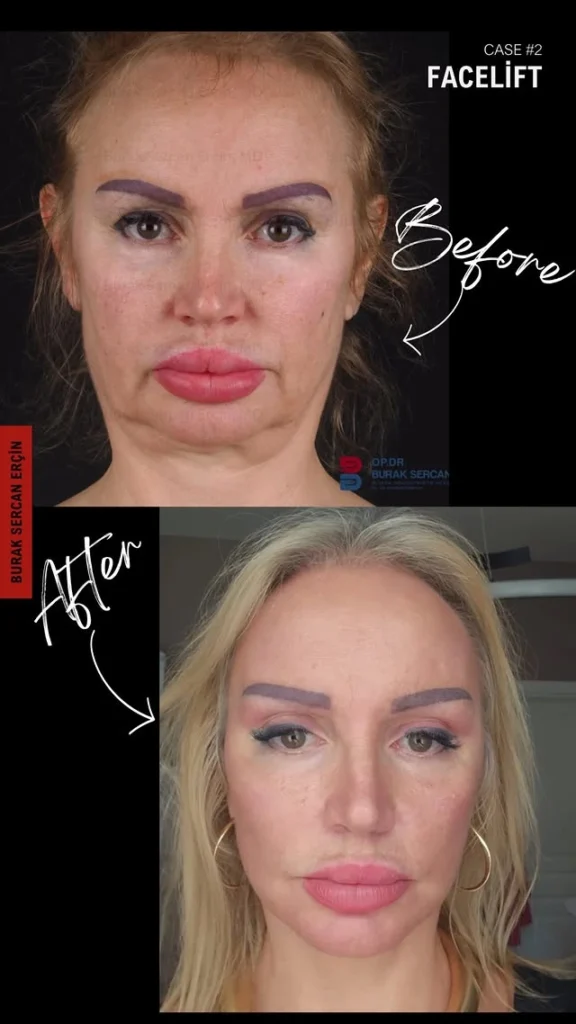
The deep plane facelift repositions the structural foundation of the face. Because the deeper tissue layers have been repositioned and anchored, the results tend to maintain their integrity longer than those achieved through skin-tensioning alone. Clinical data and surgeon experience generally suggest that well-executed deep plane results can remain satisfying for 8–12 years or longer, depending on individual factors including skin quality, lifestyle, sun exposure, and natural ageing rate.
What the procedure does not do is stop the ageing process. Patients should approach facial surgery as a meaningful reset of their facial topography — not as a permanent halt to time. Realistic expectations about the durability and evolution of results are an important part of the pre-operative conversation.
🩺 Dr. Burak’s Note
“When patients ask me about longevity, I always point to the anatomy. In a traditional facelift, you’re working against the skin’s tendency to relax again. In a deep plane approach, you’ve addressed the actual structural descent — the ptotic fat, the released ligaments, the repositioned SMAS. The result has a different mechanical basis, which is reflected in how it holds over time. That said, I encourage patients to think about results in terms of how they feel about themselves at five years, eight years, twelve years — not whether a surgeon can promise a particular number.”
Frequently Asked Questions About Deep Plane Facelift
Is a deep plane facelift painful? Most patients describe postoperative discomfort as manageable rather than severely painful, typically requiring prescription analgesics for the first few days and over-the-counter medication thereafter. Significant pain is unusual and, if it occurs, should prompt contact with the surgical team. Individual pain tolerance varies, and the pre-operative assessment includes discussion of appropriate post-operative pain management protocols.
Will there be visible scarring after a deep plane facelift? Incisions are planned to fall within the natural contours of the ear, the hairline, and the posterior hairline, where they are designed to be inconspicuous once healed. The quality of scar healing depends on individual skin type, genetic factors, surgical technique, and post-operative care. Results differ between individuals, and the pre-operative consultation is the appropriate time to discuss your specific skin type and healing history.
When can I fly home after surgery? A minimum stay of 10–14 days in Istanbul is generally recommended before long-haul air travel. Extended flights in the early post-operative period carry an elevated risk of complications, including deep vein thrombosis. The timing of travel clearance is determined individually and communicated clearly during the post-operative follow-up period.
Who is not a suitable candidate for a deep plane facelift? Patients with active, uncontrolled medical conditions (particularly cardiovascular disease or uncontrolled hypertension), significant bleeding or clotting disorders, active autoimmune conditions affecting the skin or connective tissue, or very poor skin quality and elasticity may not be suitable candidates. Smokers are at significantly elevated risk of wound healing complications and are typically advised to cease smoking well in advance of any elective procedure. Suitability is assessed comprehensively during the pre-operative consultation.
Are the results of a deep plane facelift permanent? Results are durable rather than permanent. The procedure repositions the structural layers of the face, which means the results tend to hold longer than surface techniques — generally 8–12 years is a realistic expectation, varying between individuals. Ageing continues after surgery, though patients typically maintain a refreshed appearance relative to where they would have been without intervention.
How long should I plan to stay in Istanbul for a deep plane facelift? For international patients, planning for a total stay of 16–21 days is generally advisable: this accommodates the pre-operative consultation period, the surgery itself, the initial recovery phase, and post-operative follow-up appointments before departure. Your exact schedule is planned in coordination with the clinical team based on your individual circumstances.
Can a deep plane facelift be combined with other procedures? Yes. Depending on the patient’s anatomy and aesthetic goals, a deep plane facelift is frequently combined with a neck lift, fat grafting, or eyelid surgery (blepharoplasty) in the same operative session. Combining procedures is evaluated on a case-by-case basis — not every combination is appropriate for every patient — and is discussed thoroughly during pre-operative planning. You can read more about related procedures on the aesthetic surgery page.
Making Your Decision: What to Weigh Before You Proceed
A deep plane facelift is one of the most structurally comprehensive approaches to facial rejuvenation available. It is also one of the more technically demanding procedures in aesthetic surgery, and one that requires a meaningful recovery commitment. Before arriving at a decision, there are several considerations worth reflecting on carefully.
First, the procedure’s value is heavily dependent on the appropriateness of patient selection. The most technically excellent deep plane facelift performed on a patient who was better served by a different approach will not produce the outcomes either party hoped for. Honest anatomical assessment — ideally with a surgeon who is willing to recommend against this procedure if it is not indicated — is the most important first step.
Second, recovery is real and requires planning. For international patients especially, the logistics of post-operative care in a foreign city should be thoughtfully arranged well in advance. Recovery environments, companion support, and follow-up accessibility all affect both comfort and clinical outcome.
Third, results differ between individuals. Published outcome data and the clinical experience of surgeons performing this procedure regularly provide meaningful guidance — but they are population-level data. Your individual anatomy, healing biology, skin quality, and lifestyle will all contribute to your specific result.
The most meaningful action any prospective patient can take is a thorough in-person consultation with a qualified, board-certified plastic surgeon who performs this procedure regularly and who is willing to discuss candidacy honestly — including, where appropriate, recommending against it.
Dr. Burak’s Approach
Assoc. Prof. Dr. Burak Sercan Erçin approaches facelift surgery from a foundation built across 15 years of clinical practice and more than 6,000 surgical procedures. His subspecialty training encompasses complex reconstructive surgery, microsurgery, and aesthetic surgery — a technical breadth that informs how he approaches anatomical analysis and surgical planning for facial rejuvenation procedures.
For deep plane facelift surgery specifically, Dr. Burak’s philosophy centres on anatomical precision and the avoidance of operated-looking outcomes. His core principle — “Naturalness and patient safety are always my priority” — is not a marketing phrase but a technical commitment: to release only what needs releasing, reposition only what needs repositioning, and allow the result to speak through restored facial architecture rather than surface tension.
As an EBOPRAS-certified specialist and Associate Professor at Bahçeşehir University’s Faculty of Medicine, Dr. Burak’s practice is held to the standards of ongoing academic accountability and European board certification. His training alongside world-leading reconstructive microsurgeons, including Dr. Pedro Cavadas, has shaped a technical discipline that carries through to every aspect of his surgical work.
International patients consulting with Dr. Burak can expect a structured, transparent process: a thorough pre-operative evaluation, an honest assessment of candidacy, a clearly communicated surgical plan, and a follow-up protocol designed to support recovery from abroad. The goal is never to sell a procedure — it is to ensure that every patient who proceeds to surgery does so with a complete and accurate picture of what the procedure involves and what they can realistically expect.
If you are considering a deep plane facelift and would like to understand what the right approach might look like for your specific anatomy and goals, our team is glad to help you plan your next step. You can learn more about Dr. Burak’s background and training, or explore the full range of aesthetic procedures available at our clinic in Kadıköy, Istanbul.
This content was written by Assoc. Prof. Dr. Burak Sercan Erçin in line with clinical experience and current medical literature. It is intended for general informational purposes only and does not constitute medical advice. A personal consultation with Dr. Erçin is recommended for individual assessment.
Faculty Member · Bahçeşehir University
Graduate of Ege University Faculty of Medicine, Assoc. Prof. Dr. Erçin completed advanced fellowships at Tampa General Hospital (USA) under Dr. Deniz Dayıcıoğlu in breast reconstruction and burn surgery, and at the clinic of Dr. Pedro Cavadas in Valencia, Spain in reconstructive microsurgery. After passing the EBOPRAS examination in 2018, he joined Bahçeşehir University as a faculty member and continues his private practice on Bağdat Avenue, Istanbul, specialising in face, breast and body aesthetics alongside complex reconstructive surgery.