
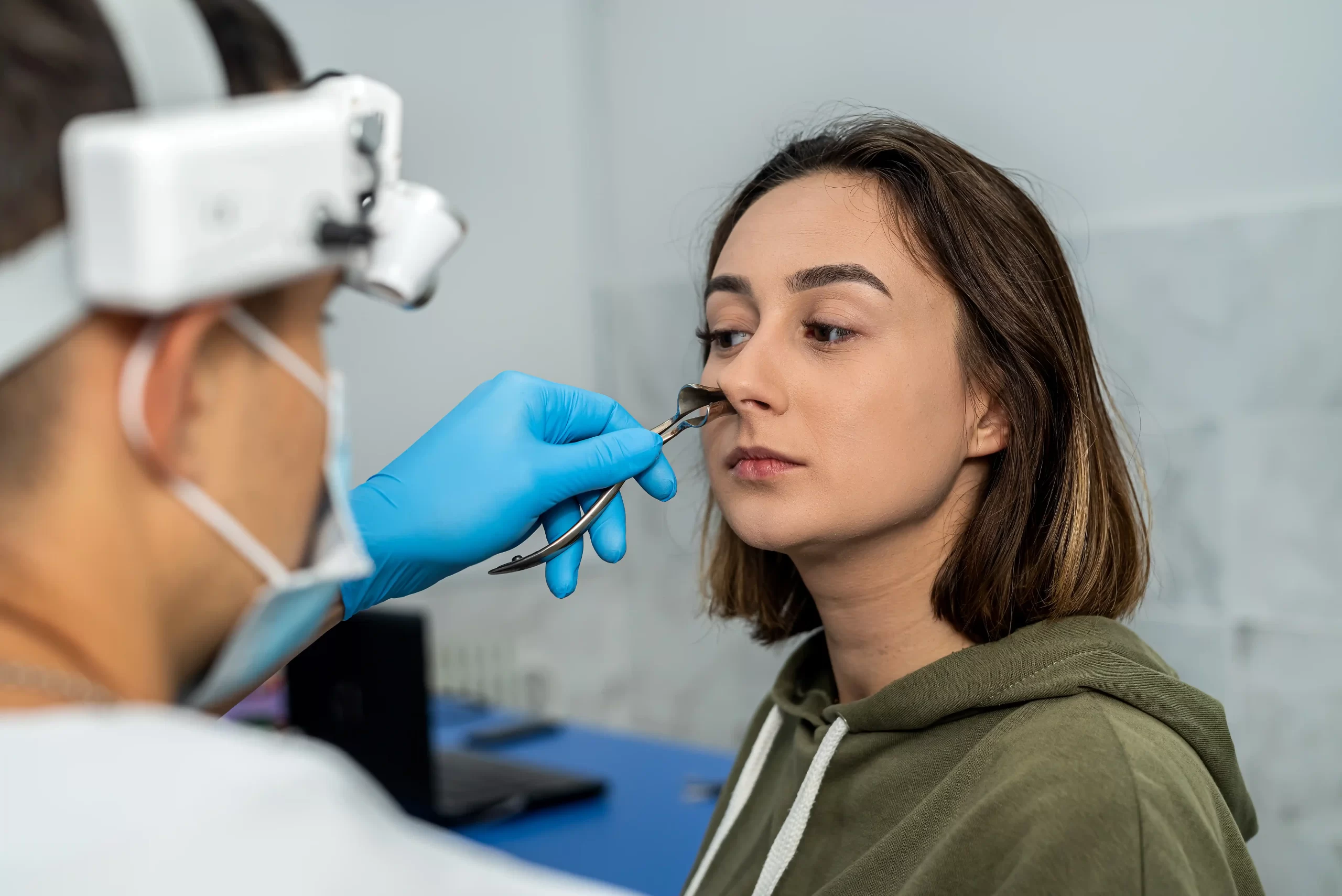
This article was written by Assoc. Prof. Dr. Burak Sercan Erçin and is based on clinical experience. A specialist in Plastic, Reconstructive and Aesthetic Surgery; prepared in accordance with current medical literature and personal surgical data. A consultation is recommended before making any medical decisions.

Pitanguy ligamentous rhinoplasty is an advanced technique for refining nasal tip shape by leveraging a key fibrous support structure (the Pitanguy ligament) at the nasal tip. In this approach, surgeons preserve and reposition the ligament to create a smooth supratip transition and optimal tip rotation. The method was first described by Ivo Pitanguy and modern refinements (such as Dr. Erçin’s ligamentous flap method) prevent common issues like post-op supratip bulges. This blog explains the origins and principles of the Pitanguy technique, compares it to traditional open and closed rhinoplasty, and outlines the full patient experience—from choosing the right candidate through surgery, recovery, and long-term results.
The article highlights the expertise of Assoc. Prof. Dr. Burak Sercan Erçin (MD, FEBOPRAS) in Turkey, who introduced a Pitanguy ligament flap method in rhinoplasty. Dr. Erçin (16+ years’ experience, Ege University-trained, EBOPRAS-certified) is a top Turkish craniofacial and plastic surgeon. His clinic (BSE Clinic, Istanbul) offers state-of-the-art care for international patients, with comprehensive support for travel, lodging, and virtual consultations. We also cover candidacy, anesthesia, risks and realistic outcomes in plain language. Key takeaways include: selecting the Pitanguy method for long-lasting tip support, understanding recovery timelines (see timeline chart below), and why choosing a Turkish specialist like Dr. Erçin can benefit medical tourists. This guide is written to inform and reassure prospective patients considering Pitanguy ligamentous rhinoplasty at BSE Clinic.
Know More about the Pitanguy Rhinoplasty Technique from Dr. Burak’s Article
Pitanguy Ligamentous Rhinoplasty Technique
Pitanguy ligamentous rhinoplasty centers on the Pitanguy ligament, a strip of fibrous tissue connecting the tip cartilage (domal area) to the nasal skin envelope. This ligament was first described by Brazilian surgeon Ivo Pitanguy. It plays a crucial role in supporting the nasal tip and affecting tip projection. In rhinoplasty, manipulating this ligament can adjust tip rotation and prevent unwanted bulging above the tip (supratip deformity). The “Pitanguy technique” generally refers to open rhinoplasty approaches that preserve or recreate the ligament to maintain natural support.
Historically, many rhinoplasty methods focused only on bone and cartilage. Pitanguy recognized the ligament’s importance in dermocartilaginous support of the nose. He showed that releasing and repositioning this ligament could refine bulbous or drooping tips. Modern surgeons (including Dr. Erçin) have built on his work by creating a ligamentous flap: a portion of the ligament is carefully dissected and repositioned or sutured under the nasal skin to shape the tip and supratip contour. This maintains a smooth junction between the dorsum and tip without an unnatural shelf.
Principles: The technique aims to reshape the nasal tip while preserving or augmenting the ligament for stability. By using an open approach, the surgeon can visualize the nasal framework and create a Pitanguy ligament flap. The ligament is then anchored (often near the tip cartilages) to add rotational lift or define the supratip break. Unlike just trimming cartilage, this method uses the nose’s own connective tissue for support. The result is a refined tip with long-term stability of rotation and projection.
Indications: Pitanguy ligamentous rhinoplasty is ideal for patients needing tip refinement without weakening tip support. Common cases include thick-skinned noses prone to supratip humps, droopy (“ptotic”) tip deformities, or cases where strong tip projection is desired. It’s also useful in revision rhinoplasty to correct previous over-rotation or supratip issues. Dr. Erçin’s series (24 patients) showed it works for both thin and thick skin types. Candidates include those wanting subtle tip lift, more defined tip shape, or avoidance of a small notch above the tip. It’s often chosen over more aggressive cartilage removal in order to preserve structural support.
How It Differs from Standard Techniques
- Open vs. Closed: The Pitanguy technique uses an open rhinoplasty approach (with a small columellar incision) to access the ligament and cartilages. This offers full visibility and control. In contrast, a closed rhinoplasty (endonasal incisions only) hides scars but limits direct access. Open rhinoplasty allows surgeons to ensure nasal symmetry and place structural grafts easily, at the expense of a slight external scar and longer swelling. Closed rhinoplasty heals faster initially and has no external scar, but it does not allow ligament repositioning or the same level of tip manipulation. Table 1 below compares these approaches.
- Ligamentous vs. Traditional: Traditional rhinoplasty often disconnects the Pitanguy ligament (especially in open approaches) and focuses on reshaping cartilage. The ligamentous technique instead uses this ligament as an advantage. By creating a composite ligament flap (Pitanguy ligament plus any attached SMAS/fibrous tissue), surgeons can fine-tune the supratip and tip without added grafts. This can minimize the risk of a visible notch or tension line above the tip. It often reduces the need for dorsal onlay grafts, since the ligament itself can be sutured to build up the supratip.

Step-by-Step Overview of the Pitanguy Technique
- Preoperative Planning: Detailed analysis of nasal anatomy with photographs and imaging. The surgeon assesses tip support, skin thickness, and the extent of nasal deformity. Virtual simulations may be used during a virtual consultation. Ideal candidates have good skin quality and realistic expectations. Any underlying issues (like deviated septum or turbinate hypertrophy) are planned for correction simultaneously.
- Anesthesia: Surgery is performed under general anesthesia for patient comfort and precision. The patient is intubated, allowing the surgeon to work meticulously on nasal structures. Minor cases may use sedation, but for Pitanguy rhinoplasty, full anesthesia is typical.
- Incisions and Exposure: A small inverted V-shaped incision is made on the columella (the tissue between nostrils) and marginal extensions inside the nostrils. This standard open approach exposes the lower lateral cartilages and nasal framework. The soft tissue envelope is gently lifted (a sub-SMAS dissection) to reveal the Pitanguy ligament.
- Pitanguy Ligament Flap Creation: The surgeon identifies the Pitanguy ligament (dermocartilaginous ligament) connecting the domes to the undersurface of the nasal skin. Instead of transecting it completely, a partial flap of ligament is preserved. In Dr. Erçin’s method, this ligamentous flap is then sutured to a more anterior/cephalic point on the domal cartilages, creating tension. This repositions the tip upward and creates a supratip break. The flap’s tension is adjustable by how tightly it’s sutured.
- Cartilage Modification: With the ligament flap in place, cartilage work is performed to refine shape. This may include trimming and reshaping the lower lateral cartilages to improve tip definition. Tip grafts (e.g. columellar strut or alar rim grafts) can be added if needed for support, especially in revision cases. The nasal septum may be adjusted or grafts harvested as necessary.
- Suturing and Support: The repositioned ligament and cartilage are stabilized with fine sutures. Often, the Pitanguy ligament is anchored to the domal cartilages or medial crura to maintain the new tip position. This supports the tip like a sling. Sometimes a small shield graft or extended spreader graft is used along with the ligament flap for additional definition.
- Closure: The soft tissues and skin are redraped smoothly over the new framework. The incisions are closed with fine sutures. An external nasal splint and internal silicone (or Doyle) splints are applied to support the nose.
After surgery, the Pitanguy ligament now acts as an internal sling, helping maintain tip rotation and projection. Patients wake up with initial swelling and bruising, but with the expectation of a more refined, stable tip. Dr. Erçin notes that in his case series, no patients developed the classic “supratip hump” or tip collapse, demonstrating the effectiveness of this approach.
Advantages and Comparison with Other Techniques
- Stability and Support: Because the Pitanguy ligament is preserved and repositioned, the nasal tip tends to remain stable long-term. Traditional open rhinoplasty can weaken tip support if the ligament is cut and not replaced, leading to delayed droop. The ligamentous flap acts as an extra support, reducing the risk of losing tip rotation over time.
- Control of Supratip Contour: One of the biggest advantages is preventing or correcting a supratip deformity. By tightening the transition from nasal dorsum to tip, the surgeon can create a smooth profile without an unwanted bump. The sharpness of the supratip break is adjustable during surgery. Many standard techniques struggle to prevent this bulge on healing, whereas the ligament flap provides a built-in buffer.
- Versatility: This technique can be used in open rhinoplasty as a primary method in any tip surgery (thick or thin skin). It adds predictability for rhinoplasties where tip rotation or projection needs careful control.
- Recovery: Patients may experience slightly more initial swelling than a closed approach (due to open dissection), but recovery is comparable to standard open rhinoplasty. Major swelling and bruising usually subside by 2–4 weeks. Because the method uses native tissue instead of large grafts, there is no additional donor-site morbidity.
- Revision Potential: If a revision is needed (for example, minor hump or asymmetry), the open approach and ligament flap do not impede further work; in fact, they lay groundwork for easier reshaping because the surgeon already has open access and a supported tip.
- Comparison Table:
| Attribute | Pitanguy Ligamentous Rhinoplasty | Open Rhinoplasty (Traditional) | Closed Rhinoplasty |
|---|---|---|---|
| Incision Type | Open (external columellar) | Open (columellar + marginal) | Closed (endonasal only) |
| Structural Support | Uses/repositions Pitanguy ligament for tip support | Can place grafts, but ligament often transected | Relies on cartilage sutures/grafts; limited ligament access |
| Scar Visibility | Small external scar on columella (well-hidden) | Small columellar scar (similar) | No external scar |
| Revision Suitability | High (full exposure for adjustments) | High (same full exposure) | Moderate (limited access for complex revisions) |
| Typical Indications | Tip rotation/definition, droopy tip, thick skin, avoiding supratip hump | Major reshaping, cartilage reduction, revisions, complex deformities | Minor hump removal, subtle tip changes, nasal obstruction (septum) |
| Recovery Time | 2–4 weeks (similar to open) | 2–4 weeks (bruising & swelling) | 1–2 weeks (generally slightly faster) |
This table illustrates that the Pitanguy ligamentous technique essentially is an open rhinoplasty with the added focus of the ligament. It combines the precision and stability of open surgery with a specific step to manage the nasal tip’s connective support.

Craniofacial Surgery Context
Rhinoplasty is a core aspect of craniofacial surgery, which addresses structural and aesthetic issues of the skull and face. Dr. Erçin is trained in craniofacial reconstructive procedures (e.g. cleft lip/palate, facial trauma) and has published in the Journal of Craniofacial Surgery. His ligament flap method was featured in a craniofacial journal, reflecting the importance of nasal ligaments in facial structure.
Patients with congenital or traumatic facial differences often require coordinated rhinoplasty for nasal shape and airway. Dr. Erçin’s craniofacial expertise ensures he understands the nasal tip not just cosmetically but as part of facial support. For example, cleft lip/palate patients have unique nasal anatomy; Dr. Erçin’s membership in the Turkey Cleft Lip & Palate Association means he applies ligamentous techniques to those cases too, aiming for functional and aesthetic harmony. In summary, Pitanguy ligamentous rhinoplasty is one tool in the craniofacial surgeon’s toolkit, useful for both aesthetic and reconstructive nasal procedures.
Candidate Selection and Pre-Operative Evaluation
Ideal candidates are adults (fully grown) in good health, who seek nasal tip refinement. They should have realistic expectations: this technique subtly improves tip definition and silhouette rather than drastically changing facial identity. Dr. Erçin evaluates each patient with high-resolution 3D imaging and nasal airflow studies if needed. Pre-op evaluation includes:
- Medical History: Ensure no bleeding disorders or contraindications.
- Nasal Exam: Check skin thickness, cartilage strength, nasal breathing, skin quality. People with excessively thick skin might see less immediate tip definition, but the ligament technique still benefits them.
- Expectation Alignment: Through photos and computer morphing, we discuss expected tip height and rotation. The patient’s facial harmony is key. Cultural aesthetics (such as Turkish beauty ideals) are considered, but patient wishes are primary.
International patients often do an initial virtual consultation (video call) to review photos and discuss goals. This is followed by a second consultation upon arrival in Istanbul, with a thorough exam and personalized surgical plan. Our team arranges a translator if needed.
Anesthesia and Facility
Pitanguy ligamentous rhinoplasty is performed under general anesthesia in a fully accredited hospital setting (Medical Park Pendik or BSE Clinic’s surgical center). Dr. Erçin works with experienced anesthesiologists and a surgical team. Operating room protocols include advanced monitoring and safety checks. In rare cases (very minor corrections), local anesthesia with sedation might suffice, but for full rhinoplasty, general anesthesia is standard.
The facility is equipped for international patient care: multilingual staff, modern surgical suites, and private recovery rooms. This ensures comfort and safety for all stages of surgery.
Operative Details (High Level)
During surgery, every step is carefully coordinated:
- The nasal framework is stabilized while the Pitanguy ligament is elevated. Then, tip cartilages are reshaped (e.g. cephalic trim of alar cartilages if needed) and the ligamentous flap is sutured to sculpt the tip.
- Any septal cartilage that needs straightening or grafting (collected for tip grafts) is done concurrently.
- If a dorsal hump reduction is also planned, osteotomies (bone cuts) are performed to narrow the nose, but this does not affect the ligament strategy.
- Throughout, Dr. Erçin emphasizes symmetry and functional breathing. For example, if internal valve support is needed, spreader grafts are placed (these do not interfere with the ligament).
- At the end, skin and soft tissues are redraped smoothly. Special emphasis is placed on avoiding dead-space and ensuring no tension under the skin, which promotes smooth contour without irregularities.
The operative time is typically 3–4 hours, depending on case complexity (open rhinoplasty with Pitanguy flap can take longer than a simple closed hump reduction).
Expected Outcomes
Patients can expect:
- Immediate Appearance: A nasal splint and sometimes external tape will be on for 1 week post-op. The nose will be swollen and bruised, especially around the eyes. The tip may be somewhat “upturned” right away.
- Short-Term (1–4 weeks): Bruising resolves by week 2. By 3–4 weeks, most swelling is gone and final shape begins to be visible. Breathing should be clear; any mild congestion is temporary.
- Mid-Term (3–6 months): The nose settles further; tip height/rotation settles as the ligament holds its new position. At 3 months, roughly 80% of the final result is apparent; small refinements may still be occurring.
- Long-Term (1 year+): Final healing is complete by 12 months. Tip position is stable thanks to the ligament support. Many patients report long-lasting satisfaction, with no return of the supratip fullness that can happen in conventional rhinoplasty without ligament support.
Studies (including Dr. Erçin’s) show high patient satisfaction: in his series of 24 patients, both doctors and patients rated their noses significantly better at 3 months than pre-op, with no one developing a notable supratip hump. Only 2 of 24 needed small touch-ups for minor dorsal irregularities (not tip-related). This suggests revision rates may be lower than average rhinoplasty if the technique is applied skillfully.
Importantly for international patients, a successful Pitanguy rhinoplasty means not only a cosmetic improvement but also maintaining nasal strength and avoiding functional issues. Because the natural ligament is used, the risk of tip collapse or breathing problems is minimized.
Risks, Complications and Management
All surgery has risks. Specific to Pitanguy ligamentous rhinoplasty:
- Bleeding or Infection: Very rare (similar to other rhinoplasty, usually prevented by antibiotics and careful technique).
- Swelling and Bruising: Expected; can take several weeks. This is managed with cold compresses and head elevation.
- Altered Skin Sensation: Numbness of the tip or upper lip can occur but usually resolves in months.
- Supratip Depression/Notching: Unlikely with this technique (it usually prevents supratip bumps). However, if the ligament is over-tightened, theoretically a slight indent could occur; this is carefully avoided by tension control during surgery.
- Scarring: The tiny columellar scar is usually well-hidden. Sun care and silicone gel can help any redness fade.
- Functional Issues: Nasal obstruction could occur if grafts are not placed properly; Dr. Erçin’s approach avoids damaging support structures, minimizing airway risk. He also checks nasal breathing before finishing.
If complications do occur, management is similar to standard rhinoplasty care: e.g., wound care for infection, steroid injections for prolonged swelling, or minor revision for asymmetry after healing (usually after 6–12 months). Dr. Erçin’s published experience showed no major complications and no revisions needed specifically for tip support issues.
Recovery Timeline
Patients should plan for about 7–10 days of recovery in Turkey. Many can travel back home after 10–14 days, if follow-up arrangements are made. The clinic provides detailed postoperative instructions, including sleep position, nasal care (saline irrigations), and gradual return to activities. Here is a timeline of key milestones:
Most patients are pleasantly surprised by how quickly they heal. By 2 weeks, bruising is nearly gone. By 3 months, the nose feels natural. Full recovery (when even minor swelling dissipates) is by 6–12 months. Follow-up visits (in-person or via telemedicine) are scheduled at 1 week, 1 month, 3 months, and 1 year to monitor progress and answer any questions.
Before/After Expectations & Revision Rates
Before: Patients with a drooping or undefined tip will see an immediate visual difference after dressing removal: the tip has more rotation, and the bridge-to-tip transition is smoother. However, it’s important to set realistic expectations: the nose will be swollen, and final softness takes months. The goal is improved harmony (e.g., a slightly upturned tip that looks balanced with chin and forehead). Dr. Erçin shows many before/after photos (with patient consent) so prospective patients understand the likely improvements.
Revision Rates: Traditional rhinoplasty has an average revision rate (20% or more in complex cases). Early data on Pitanguy ligament technique are limited but promising. In Dr. Erçin’s 24 cases, no patients needed revision for tip ptosis or supratip deformity. Only minor dorsal issues (not related to the ligament flap) were revised in 2 cases. That suggests very low tip-related revision, though long-term studies are still needed. Because the approach uses existing ligament support, many surgeons believe it may reduce the need for future touch-ups of the tip.
Long-Term Results: Once healed (12+ months), results should be stable for life. The repositioned ligament keeps the tip from sagging with age. Patients have reported durability of results 5-10 years out, with no significant changes. Of course, aging and gravity can subtly affect any nose over decades, but this technique is designed to maximize permanence of the initial outcome.
Why Choose Dr. Burak Sercan Ercin and BSE Clinic in Turkey?
Turkey is a global hub for medical tourism, especially in aesthetic and reconstructive surgery. There are several reasons international patients choose Turkey and Dr. Erçin:
- Expertise and Credentials: Dr. Erçin (MD, FEBOPRAS) has 16+ years of experience. He trained at Turkey’s top medical schools and international centers (USA, Spain). He holds the European Board certification (EBOPRAS) and is active in professional societies. His publication in the Journal of Craniofacial Surgery demonstrates cutting-edge skills.
- Proven Technique: Dr. Erçin pioneered the Pitanguy ligament flap method (published 2020) for improved rhinoplasty outcomes. His patients provide glowing reviews: “extreme attention to detail…one of the top surgeons in the world” (Trustpilot) and 100% 5-star ratings on platforms (Bookimed) for rhinoplasty.
- State-of-the-Art Facilities: The BSE Clinic and partner hospitals (e.g., VM Medical Park) offer premium care: modern ORs, international accreditation, and English-speaking staff. ICU and multi-disciplinary teams are on-site, ensuring safety for all surgeries, even complex craniofacial cases.
- Comprehensive Patient Care: The clinic provides end-to-end service for international patients. This includes:
- Virtual Consultations: Detailed pre-op planning via video calls, saving travel until decision is made.
- Personalized Itinerary: Assistance with travel bookings, visa guidance, and hotel partnerships.
- Transportation and Language: Airport pickup in Istanbul, hospital transfer, and interpreter services (if needed) ensure comfort and clear communication.
- Aftercare: Even after returning home, patients have access to follow-up via telemedicine, and 24/7 contact for any concerns.
- Value and Location: Istanbul combines world-class healthcare with cultural appeal. Patients benefit from quality up to European standards at a fraction of the cost. It’s safe, tourist-friendly, and offers an easy long weekend stay. Plus, no waiting lists – surgeries can be scheduled as soon as all clearances are done.
Here’s why international patients trust BSE Clinic for Pitanguy rhinoplasty:
- Proven Experience: Thousands of surgeries performed; Dr. Erçin personally conducts each case.
- Safety and Accreditation: Licensed by Turkish health authorities, partnership with reputable hospitals.
- Patient Satisfaction: Testimonials highlight attentive nursing care and personalized attention.
- Clear Communication: English and other languages spoken; clear consent and explanation of procedure.
Consultations and Care: Whether you’re in Europe, the Middle East, or beyond, you can book a consultation easily. The process is streamlined: send photos online, discuss goals with our coordinator, and schedule your surgery date. We understand many patients are busy professionals; Dr. Erçin’s team will coordinate treatment so you can plan time off work with confidence.
Frequently Asked Questions (FAQs)
- Is Pitanguy ligamentous rhinoplasty right for me? If you want a refined, elevated tip and have a drooping or bulbous tip, this technique offers natural, long-lasting support. It’s best for patients with realistic goals and good overall health. Dr. Erçin will assess your anatomy to determine if preserving the ligament will benefit your specific nose shape.
- How long does the procedure take and how many visits are needed? Surgery itself takes about 3–4 hours. Typically, international patients have: a pre-op consult upon arrival, surgery day, 1-week post-op check (for splint removal), a 1-month follow-up (optional via phone/online if you’ve returned home), and final check at 3-6 months.
- What about anesthesia and hospitals? You’ll receive safe general anesthesia. Surgery is done in an accredited Turkish hospital with modern facilities. Dr. Erçin’s team includes experienced anesthesiologists and nursing staff trained for international patients.
- When can I travel? Most patients can fly 10–14 days after surgery, once major swelling and bruising have subsided. We advise against long flights immediately post-op. BSE Clinic offers assistance booking flights and comfortable nearby hotels for the recovery period.
- What if I need revision? Revisions are rare with this method, but if needed, Dr. Erçin will plan it after full healing (often 6–12 months later). The open approach makes future adjustments easier.
- Costs and financing? Turkey offers high-quality rhinoplasty at competitive prices. The exact cost varies by procedure complexity. Our coordinator can provide a personalized quote. You pay the clinic directly; Bookimed or other partners may handle payment logistics. Installment plans can be arranged in some cases.
- Is language a barrier? No. Dr. Erçin and most staff speak fluent English. Clinic coordinators also speak multiple languages. Communication will be smooth during your stay.
- Why a Turkish surgeon? Turkey’s cosmetic surgery industry is renowned. Surgeons like Dr. Erçin are trained internationally and meet strict certification standards. Combining his expertise with Turkey’s service-oriented care gives patients a premium experience.
This content was written by Assoc. Prof. Dr. Burak Sercan Erçin in line with clinical experience and current medical literature. It is intended for general informational purposes only and does not constitute medical advice. A personal consultation with Dr. Erçin is recommended for individual assessment.
Faculty Member · Bahçeşehir University
Graduate of Ege University Faculty of Medicine, Assoc. Prof. Dr. Erçin completed advanced fellowships at Tampa General Hospital (USA) under Dr. Deniz Dayıcıoğlu in breast reconstruction and burn surgery, and at the clinic of Dr. Pedro Cavadas in Valencia, Spain in reconstructive microsurgery. After passing the EBOPRAS examination in 2018, he joined Bahçeşehir University as a faculty member and continues his private practice on Bağdat Avenue, Istanbul, specialising in face, breast and body aesthetics alongside complex reconstructive surgery.


