This article was written by Assoc. Prof. Dr. Burak Sercan Erçin and is based on clinical experience. A specialist in Plastic, Reconstructive and Aesthetic Surgery; prepared in accordance with current medical literature and personal surgical data. A consultation is recommended before making any medical decisions.
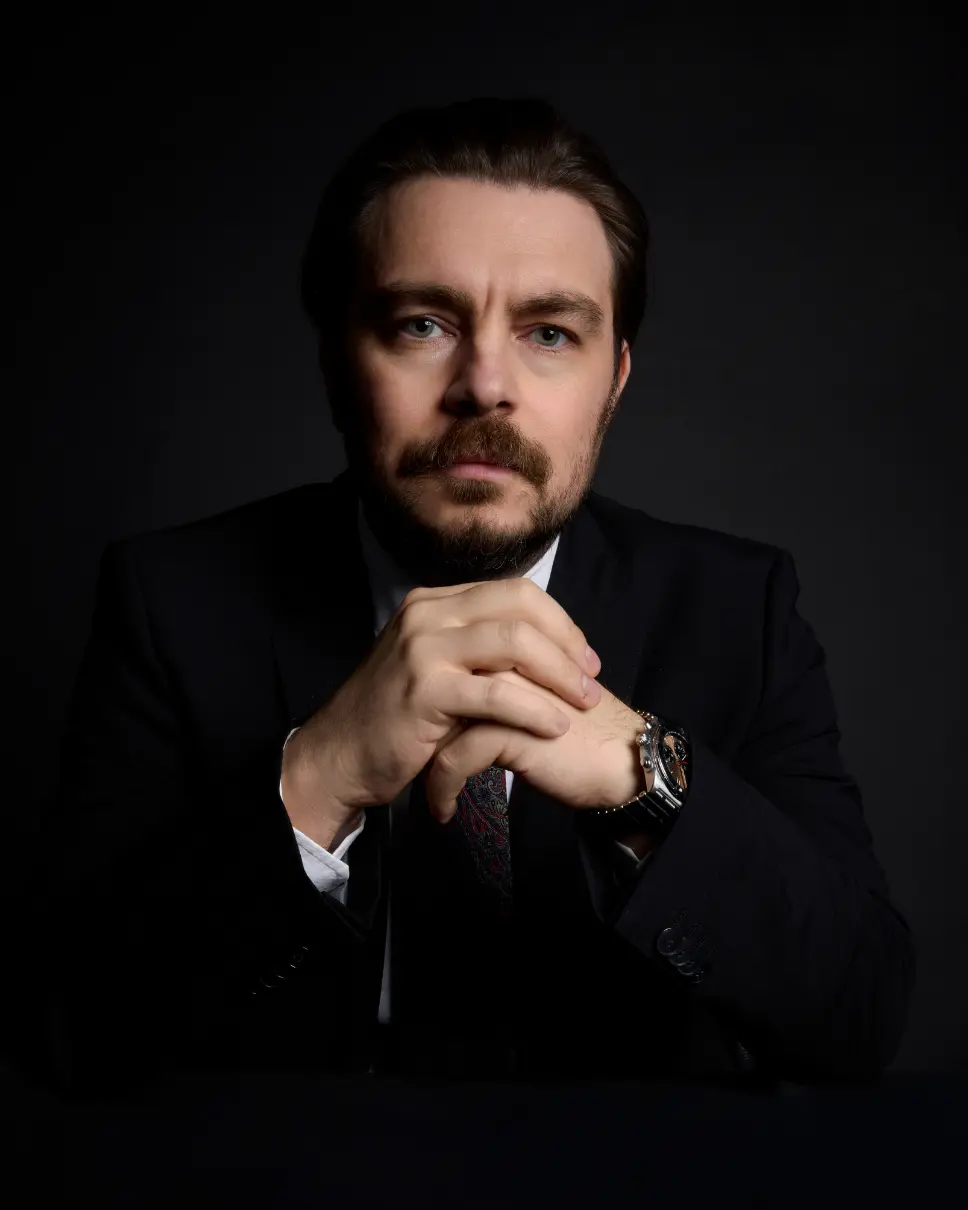
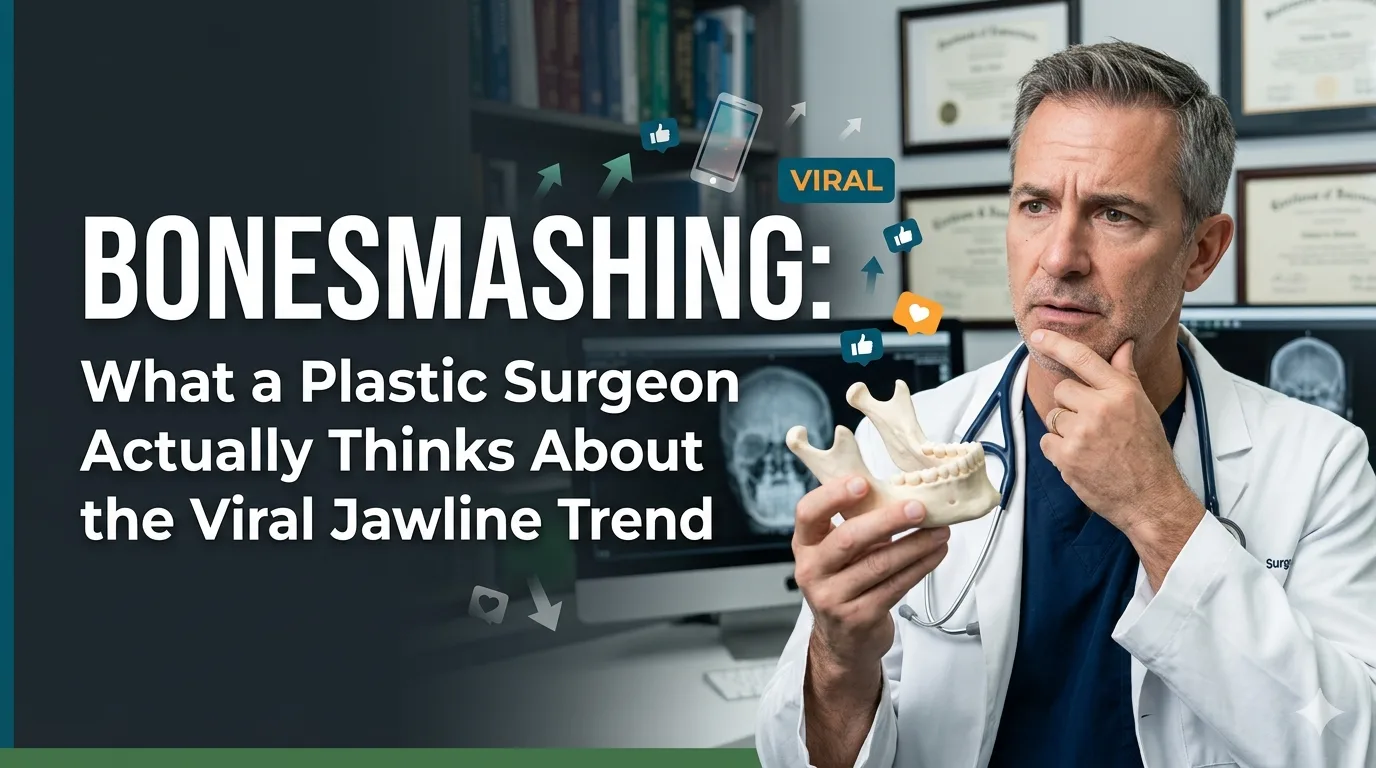
If you have spent time on TikTok or looksmaxxing forums recently, you have probably seen it: a young man striking his own face with a hard object, claiming the practice will remodel the bone into a sharper, more chiselled jawline. The trend is called bonesmashing, and it has travelled from obscure Reddit threads into millions of social media feeds. As a plastic and reconstructive surgeon based in Istanbul, Turkey, Dr. Burak Sercan Erçin sees the consequences of this trend firsthand, and the clinical reality is very different from the online promise.
The desire behind bonesmashing is understandable. A defined jawline is a genuine marker of facial harmony, and wanting one is reasonable. The method, however, is not simply ineffective. It carries a real risk of permanent damage to the face. What follows is an honest look at the trend, the science behind why it does not work, and the safe, proven alternatives for jawline definition available with an experienced surgeon.
What Is Bonesmashing? The Trend Explained
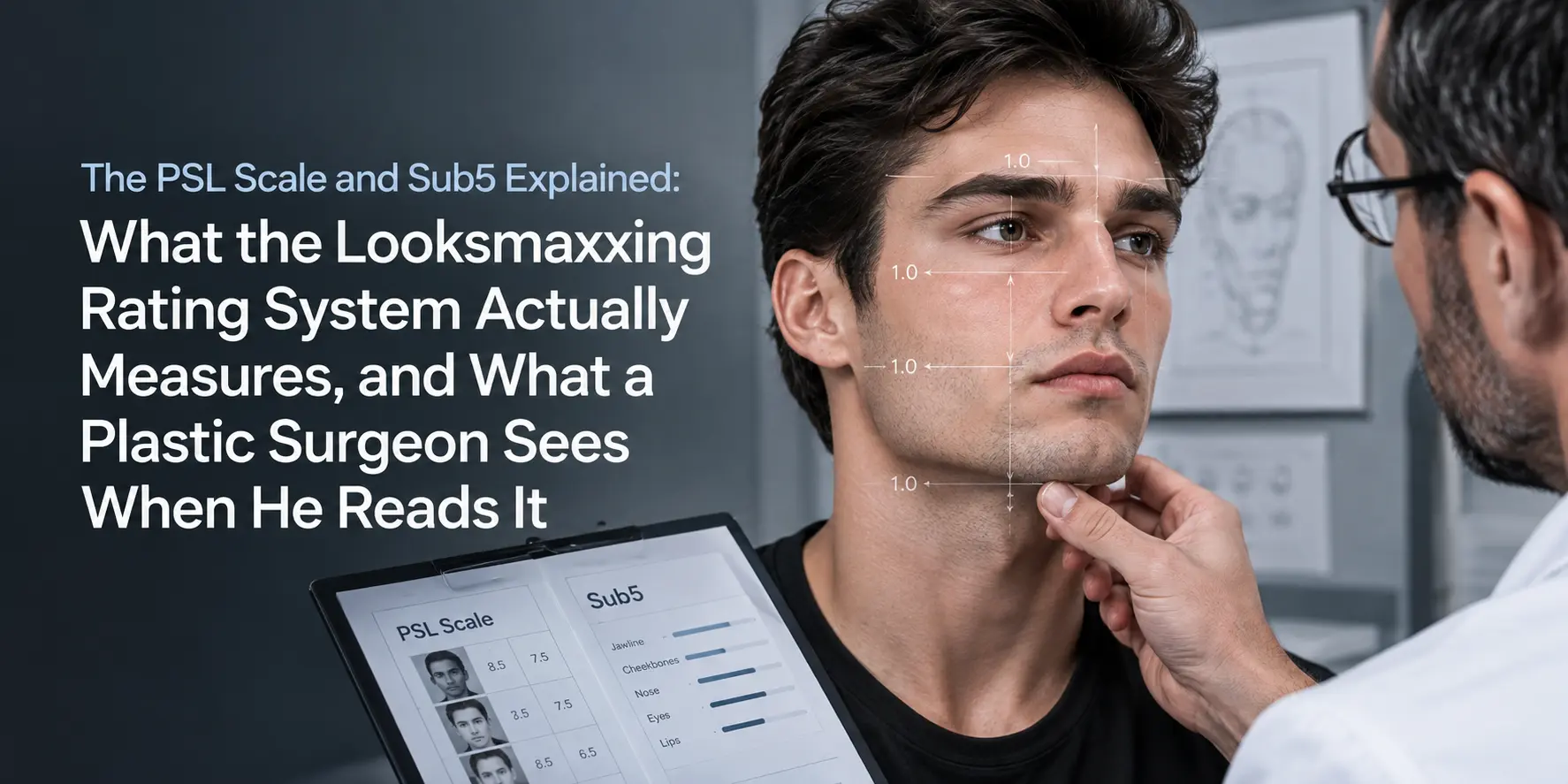
Bonesmashing, sometimes called bone smashing or face hammering, is the practice of repeatedly striking the bones of the face, usually the jaw and cheekbones, in the belief that the resulting trauma will cause the bone to grow back thicker, denser, and more angular. It emerged within the looksmaxxing community, an online movement focused on maximising physical attractiveness, and it sits at the most extreme end of what that community calls hardmaxxing: invasive or high-risk methods of changing one’s appearance.
The supposed logic rests on a misreading of a real biological principle. Bonesmashers point to Wolff’s law, a genuine concept in bone physiology which states that bone adapts over time to the loads placed upon it. They conclude that if you stress the facial bones through impact, the bones will rebuild themselves into a stronger, sharper shape. For readers who want the broader context of where this sits within the looksmaxxing landscape, the difference between softmaxxing and hardmaxxing is covered in detail elsewhere on the blog.
It is important to be clear about one thing from the start. Bonesmashing is widely discussed online, often half-jokingly, but a meaningful number of young people are genuinely attempting it. This is not a harmless meme. Striking the facial skeleton has predictable medical consequences, and none of them include a sculpted jaw.
Does Bonesmashing Actually Work? The Science of Bone Remodelling
The short answer is no. Wolff’s law describes how bone responds to sustained, physiological loading over long periods, such as the way weight-bearing exercise gradually strengthens the skeleton. It does not describe what happens when bone is subjected to sudden blunt force. Those are two entirely different biological events, and confusing them is the central error of the bonesmashing theory.
When bone is struck hard enough to cause change, the result is microtrauma or fracture, not controlled sculpting. The body heals that damage by forming a callus, an irregular mass of new bone that bridges the injury. Callus formation is unpredictable by nature. It does not follow the smooth, symmetrical lines a person imagines when they picture a sharper jaw. The far more likely outcomes are lumps, asymmetry, and a face that looks less harmonious than before, not more.
There is a further problem. The facial bones are not load-bearing in the way the femur or spine are. The cheekbones in particular carry almost no mechanical load, so the adaptive response bonesmashers are hoping for has no physiological basis there at all. The jaw experiences chewing forces, which is precisely why chewing-based approaches are discussed in the community, but even sustained chewing does not reshape the bony angle of the jaw in any meaningful aesthetic way.
What Actually Happens When You Strike Facial Bone
The risks of repeated facial impact are not theoretical. They are the same injuries seen in assault and sporting trauma, and they can be serious and permanent:
- Facial fractures, including of the nasal bones, cheekbones (zygoma), and jaw, which can require surgical repair.
- Nerve damage, particularly to the infraorbital and trigeminal nerve branches, which can cause lasting numbness, tingling, or chronic facial pain.
- Permanent facial asymmetry from uneven, unpredictable bone healing.
- Damage to the teeth and tooth roots, and injury to the temporomandibular joint (TMJ) that can cause long-term jaw dysfunction.
- Soft tissue injury, bruising, and the risk of infection where the skin is broken.
None of these outcomes are reversible through more of the same activity. In the worst cases, they require reconstructive surgery to correct, which is a far more involved undertaking than the elective procedure the person might have considered in the first place.
| 🩺 Dr. Burak’s Clinical Note “The patients who worry me most are not the ones asking about jaw implants. They are the ones who arrive having already tried to change their bone structure at home and now present with pain, numbness, or asymmetry. I would far rather a patient come to a consultation first and learn what is realistic and safe than try to shortcut the process in a way that can cause damage we then have to repair.” |
| If you are weighing up your options for jawline definition and want an honest, no-pressure assessment of what surgery can and cannot achieve for your face, Dr. Burak offers online consultations via WhatsApp and video call before you travel to Istanbul. |
The Goal Is Real, the Method Is Wrong
It would be easy to dismiss the whole trend, but that misses something important. The underlying wish, a more defined and balanced lower face, is one that plastic surgeons address every day through legitimate means. The looksmaxxing community did not invent the idea that jaw definition contributes to facial attractiveness. Aesthetic medicine has recognised it for decades, and there are well-established, evidence-based ways to enhance the jawline that carry none of the risks of self-inflicted trauma.
The honest framing is this. If your jaw genuinely lacks definition, the cause is usually one of a small number of things: the bony structure itself, a recessed or under-projected chin, an overdeveloped or underdeveloped masseter muscle, excess fat beneath the chin, or skin laxity that comes with age. Each of these has a specific, safe solution, and the right one depends entirely on an individual assessment. Striking the face addresses none of them.
Safe, Proven Ways to Define the Jawline
Jawline enhancement is not a single procedure. The right approach depends on the patient’s anatomy and the specific reason the jaw lacks definition. The following options are all established, studied, and performed by qualified surgeons. They are frequently combined to produce a balanced result.
Mandibular Angle Implants
For a jaw that is structurally under-defined at the rear angle, custom or pre-formed implants placed over the jawbone add projection and create a crisper transition from the cheek to the neck. Implants are positioned through incisions inside the mouth, so there is no visible external scarring. When the size and shape are chosen for the individual face rather than a generic template, the result is a natural-looking definition that is permanent. The full procedure, candidacy, and recovery are covered in Dr. Burak’s jaw implants guide.
Sliding Genioplasty and Chin Surgery
The chin has an outsized effect on how the whole jawline reads. A chin that sits too far back makes even a well-structured jaw appear weak. Sliding genioplasty repositions the patient’s own chin bone forward to improve projection and balance, and because it uses the natural bone rather than an implant, many surgeons consider it the gold standard for significant chin correction. Chin implants are an alternative for more modest changes. Both are detailed on Dr. Burak’s sliding genioplasty in Turkey page.
Orthognathic (Corrective Jaw) Surgery
When the issue is not just aesthetic but structural, for example a significant underbite, overbite, or jaw misalignment, orthognathic surgery repositions the upper and lower jaws into correct alignment. This is a more involved procedure performed in collaboration with orthodontic treatment, and it addresses both function and facial profile. It is the appropriate route for patients whose concerns go beyond surface definition into how the jaws meet and work.
Non-Surgical Options: Masseter Botox, Fillers, and Softmaxxing
Not every jawline goal requires surgery. Botulinum toxin (Botox) injected into an overdeveloped masseter muscle can slim a wide, square lower face over a few weeks. Dermal fillers can add temporary definition along the jaw and chin. And the genuinely useful side of looksmaxxing, the softmaxxing practices of losing excess body fat, improving skin quality, sleep, and posture, can meaningfully sharpen a jawline with no medical risk at all. These approaches make sense as starting points for mild concerns or for patients who are not ready for surgery.
| 🩺 Dr. Burak’s Clinical Note “In my practice, the single most common discovery during a jawline consultation is that the patient’s real issue is chin projection, not the jaw angle they came in focused on. A retruded chin can make a perfectly good jaw look weak. Identifying the true cause is the entire value of an in-person assessment, and it often points to a simpler, lower-risk procedure than the patient expected.” |
Why Consider Turkey and Istanbul for Jawline Surgery?
Many of the people drawn to looksmaxxing content are researching surgery abroad, and Turkey has become one of the leading global destinations for facial procedures. The reasons are straightforward. The country’s top hospitals are JCI (Joint Commission International) accredited and operate to the same standards patients expect in the UK, the US, and Australia. The value proposition is genuine, and Istanbul in particular has deep surgical expertise concentrated in facial work.
What separates a safe choice from a risky one is the surgeon’s credentials. The benchmark to look for in Turkey is EBOPRAS certification, the diploma of the European Board of Plastic, Reconstructive and Aesthetic Surgery, which represents the highest formal standard of plastic surgery training in Europe. ISAPS consistently ranks Turkey among the top countries worldwide for the volume of plastic and reconstructive surgery performed each year, but volume alone is not a guarantee of quality. Credentials, accreditation, and a clear consultation process are what matter.
A Necessary Word on Age, Realism, and Expectations
Two points deserve emphasis, because the looksmaxxing space tends to overlook both. The first is age. Facial bone growth is not complete until the late teens, and reputable surgeons do not perform elective jaw and chin surgery on patients whose faces are still developing. Anyone still in their teenage years should focus on the safe, reversible softmaxxing fundamentals rather than surgical or, worse, self-inflicted interventions.
The second is realism. Surgery can refine and define a jawline, but it cannot turn one person into someone else, and it cannot resolve the deeper dissatisfaction that some looksmaxxing content actively cultivates. If thoughts about appearance are causing significant distress or are difficult to control, that is worth discussing with a doctor or mental health professional, not just a surgeon. A responsible surgical consultation includes an honest conversation about whether a procedure is the right answer at all. This is a sensitive area, and anyone struggling with how they feel about their appearance deserves proper support.
Frequently Asked Questions
Does bonesmashing actually work?
No. Bonesmashing is based on a misapplication of Wolff’s law, which describes how bone adapts to sustained physiological loading, not sudden impact. Striking the face causes microtrauma or fracture that heals as irregular callus, leading to lumps, asymmetry, and potential nerve and dental damage rather than a sharper jawline. There is no credible evidence that it produces the intended aesthetic result, and considerable evidence that it causes harm.
Is bonesmashing dangerous?
Yes. The practice can cause facial fractures, permanent nerve damage with lasting numbness or chronic pain, damage to teeth and the jaw joint, facial asymmetry, and infection. These are the same injuries seen in facial trauma cases, and some require reconstructive surgery to correct. The risk is real even when the impact feels minor at the time.
What is the safest way to get a more defined jawline?
The safest route is an individual assessment with a qualified surgeon, who can identify why the jaw lacks definition and recommend the appropriate option. Depending on the cause, this may be mandibular angle implants, sliding genioplasty or a chin implant, orthognathic surgery for structural cases, masseter Botox, or simply softmaxxing fundamentals such as reducing body fat and improving skin and posture.
Can you change your jawline without surgery?
To a degree, yes. Losing excess facial fat, improving skin quality, and reducing an overdeveloped masseter muscle with Botox can all sharpen the appearance of the jawline. Dermal fillers can add temporary definition. However, the underlying bony structure of the jaw and chin can only be changed surgically. Non-surgical methods refine what is there; they do not alter the skeleton.
How much definition can jawline surgery realistically add?
Jawline surgery can produce a clear, natural improvement in definition and balance, but results are bounded by the patient’s underlying anatomy and skin. A good surgeon aims for harmony with the rest of the face rather than an extreme or artificial look. Realistic expectations are part of every responsible consultation, and digital planning can help show what is achievable before any decision is made.
Is Dr. Burak EBOPRAS certified?
Yes. Assoc. Prof. Dr. Burak Sercan Erçin holds the EBOPRAS diploma of the European Board of Plastic, Reconstructive and Aesthetic Surgery, the highest formal plastic surgery credential in Europe, and practices at Pendik Medical Park in Istanbul. He offers online consultations for international patients before travel.
The Jawline You Want Does Not Come From a Hammer
Bonesmashing is the clearest example yet of how a real aesthetic goal can be hijacked by a method that does the opposite of what it promises. The wish for a defined, balanced jawline is legitimate, and there are safe, studied, surgeon-led ways to pursue it. Striking your own face is not one of them, and the damage it can cause is often harder to fix than the original concern.
For anyone considering jawline enhancement from the UK, the US, the Gulf, Australia, or Europe, the right first step is a conversation with a properly credentialled surgeon who will tell you honestly what your face needs and whether surgery is even the answer. Istanbul offers that expertise at a genuine value, provided the surgeon is chosen on credentials rather than price or social media hype.
Why Assoc. Prof. Dr. Burak Sercan Erçin
Dr. Burak Sercan Erçin is an Istanbul-based Plastic, Reconstructive and Aesthetic surgeon with more than 15 years of experience and over 6,000 operations. He trained alongside Dr. Pedro Cavadas, one of the world’s leading reconstructive microsurgeons, and holds the EBOPRAS diploma. He serves as academic faculty at Bahçeşehir University and practices at Pendik Medical Park, Istanbul. His reconstructive background is particularly relevant to jaw and facial work, because the surgeons who repair facial trauma understand the facial skeleton in a depth that purely aesthetic practitioners often do not. To discuss your case, book an online consultation or reach out via WhatsApp.
This content was written by Assoc. Prof. Dr. Burak Sercan Erçin in line with clinical experience and current medical literature. It is intended for general informational purposes only and does not constitute medical advice. A personal consultation with Dr. Erçin is recommended for individual assessment.
Faculty Member · Bahçeşehir University
Graduate of Ege University Faculty of Medicine, Assoc. Prof. Dr. Erçin completed advanced fellowships at Tampa General Hospital (USA) under Dr. Deniz Dayıcıoğlu in breast reconstruction and burn surgery, and at the clinic of Dr. Pedro Cavadas in Valencia, Spain in reconstructive microsurgery. After passing the EBOPRAS examination in 2018, he joined Bahçeşehir University as a faculty member and continues his private practice on Bağdat Avenue, Istanbul, specialising in face, breast and body aesthetics alongside complex reconstructive surgery.