
This article was written by Assoc. Prof. Dr. Burak Sercan Erçin and is based on clinical experience. A specialist in Plastic, Reconstructive and Aesthetic Surgery; prepared in accordance with current medical literature and personal surgical data. A consultation is recommended before making any medical decisions.

Twelve months ago, most patients had never heard of rib remodeling. In mid-2026, it is one of the most discussed body-contouring procedures in aesthetic surgery. Marie Claire has called 2026 “the year of the waist,” the American Society of Plastic Surgeons (ASPS) published a formal position piece on the technique in June, and peer-reviewed case reports have started appearing in journals such as JPRAS Open. The interest is driven by a genuinely new surgical capability: it is now possible, in properly selected patients, to reshape the position of the lower ribs and meaningfully narrow the waist without removing them. Rib remodeling in Istanbul, Turkey, is a natural extension of the city’s established body-contouring expertise, and Assoc. Prof. Dr. Burak Sercan Erçin’s reconstructive and craniofacial background gives him the skeletal understanding this procedure specifically demands.
This guide covers what rib remodeling actually is, how it differs from the older and more controversial rib removal surgery, who is genuinely a candidate, what the recovery involves, and the questions any patient should ask before booking the procedure anywhere in the world.
What Is Rib Remodeling? A Body-Contouring Category, Not a Trend
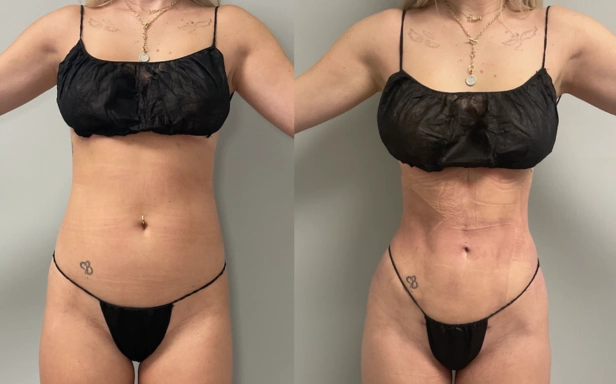
Rib remodeling, also called costal recontouring or minimally invasive rib remodeling (MIRR), is a body-contouring procedure that reshapes the position of the lower ribs to create a narrower, more defined waist. It is performed through very small skin incisions, typically requiring nothing larger than a needle-sized entry point, and uses specialised ultrasonic instrumentation to score the bone precisely enough that the surgeon can mobilise it into a new position. Once the ribs have been repositioned, the patient wears a shaping garment for a defined healing period so the bone heals in its new location.
The procedure targets the free-floating lower ribs (typically ribs 11 and 12) and, in some techniques, the lower fixed ribs (10 and sometimes 9), because these are the ribs whose lateral projection contributes most to the width of the upper waist. Repositioning these ribs medially, even by a few millimetres per side, produces a measurable and visible narrowing of the waist. Published clinical descriptions and case reports document waist reductions in the range of 2 to 5 inches (roughly 5 to 12 cm) in appropriately selected patients.
The distinction that matters clinically, and the one most patients get confused about, is that rib remodeling reshapes the ribs. It does not remove them. That single difference changes the safety profile, the recovery, and the long-term structural integrity of the chest wall.
Rib Remodeling vs Rib Removal: The Difference Every Patient Needs to Understand
The idea of removing ribs to narrow the waist is older than most patients realise. It surfaced in aesthetic surgery in the 1980s, largely on the strength of an unsubstantiated 1988 rumour about the singer Cher, and it has been discussed in fashion and celebrity contexts ever since. Rib removal, as an actual surgical procedure, requires large incisions, invasive dissection, resection of one or more ribs, and a recovery that includes real risks: pleural injury, chronic pain, loss of chest-wall protection for the internal organs, and a permanently altered skeletal structure. It is available in a very small number of clinics globally and is broadly discouraged by mainstream plastic surgery organisations.
Rib remodeling was developed specifically as the safer, structure-preserving alternative. The key differences:
- Incision size:
Rib removal requires larger, visible incisions. Rib remodeling is performed through tiny percutaneous entry points, typically leaving no visible scar. - Bone treatment:
Rib removal resects (cuts out) part of the rib. Rib remodeling scores and mobilises the rib into a new position while preserving the bone itself. - Structural integrity:
Rib removal permanently removes protective bone. Rib remodeling preserves the natural framework of the chest wall. - Recovery:
Rib removal involves a prolonged, painful recovery with significant restrictions. Rib remodeling recovery is shorter and less severe, though it does require compliance with post-operative shaping garments. - Safety profile:
Rib removal carries substantially higher rates of complications including pleural injury, chronic neuralgia, and long-term chest-wall dysfunction. Rib remodeling, performed by an appropriately trained surgeon, has a much more favourable risk profile.
When leading plastic surgeons are quoted on the topic, the position is consistent: rib remodeling is a legitimate, evolving procedure with a defined evidence base. Rib removal is not something a responsible surgeon recommends. The two should not be confused.
| 🩺 Dr. Burak’s Clinical Note “Every week I speak to patients who come in asking about rib removal because that is what they saw on social media. My first job is always education. Removing bone from the chest wall is not the modern approach to waist definition, and it is not something I recommend. Rib remodeling, done well, achieves a similar aesthetic goal by working with the existing skeleton rather than reducing it. That is a fundamentally different operation, and it deserves a fundamentally different conversation.” |
Who Is a Candidate for Rib Remodeling?
Rib remodeling is not appropriate for every patient who wants a narrower waist. Because the anatomical constraint being addressed is the skeletal structure of the rib cage, the procedure is only useful when the ribs themselves are what is limiting the waistline. In patients whose waist width is driven primarily by abdominal fat, muscle bulk, or skin laxity, other procedures such as liposuction, tummy tuck, or a well-planned body-contouring combination are more appropriate.
The strongest candidates typically share several characteristics:
- A rib cage that is anatomically wider than the surrounding soft tissue would suggest, producing a straight or boxy torso outline even in patients who are otherwise slim and toned.
- Previous body contouring (liposuction, tummy tuck, mommy makeover) that has already addressed the fat and skin components, leaving the underlying rib structure as the remaining limit on waist definition.
- Good overall health, stable weight, and no significant respiratory, cardiac, or bone-related conditions that would compromise safety.
- Realistic expectations, calibrated to what is achievable rather than what social media suggests.
- Willingness to comply with the post-operative shaping-garment protocol, which is essential to the outcome.
Rib remodeling is also emerging as a component of gender-affirming body contouring in transfeminine patients, where it can contribute to thoracic feminisation alongside procedures such as male-to-female surgery and facial feminization surgery. A 2026 case report in JPRAS Open documented one of the first published applications of rib remodeling in a transfeminine patient. This remains a smaller subset of the overall patient population, but it is a growing indication.
How the Procedure Actually Works
Rib remodeling is performed under general anaesthesia in a hospital operating theatre. The specific technique varies slightly between surgeons, but the core steps are consistent.
Pre-Operative Imaging
Detailed imaging of the chest wall, typically including CT or 3D reconstruction, is used to plan the exact position and angle of each rib to be repositioned. This is a procedure where planning is at least as important as execution. Without accurate imaging, the surgeon cannot safely predict the effect of the intervention.
Small Percutaneous Access
Very small entry points are made in the skin overlying the target ribs. In most techniques, these are small enough to leave no visible scar once healed. This is a significant difference from traditional rib removal, which requires substantially larger incisions.
Ultrasonic Bone Scoring
A specialised ultrasonic instrument, typically a piezoelectric device, is used to score the rib at pre-planned locations. The ultrasonic technology is important because it cuts bone selectively without damaging the surrounding soft tissue, nerves, or the pleura (the lining of the lung cavity). This precision is what makes minimally invasive rib remodeling possible.
Rib Mobilisation and Repositioning
Once the rib has been scored, the surgeon manually repositions it into the planned new location. The mobilisation is typically limited to a few millimetres per rib, but this is sufficient to produce a visible narrowing of the waist because the effect is compounded across multiple ribs and both sides of the body.
Post-Operative Shaping Garment
Immediately after surgery, the patient is fitted into a specialised compression garment (in some techniques, a structured corset-style garment). This garment holds the ribs in their new position while the bone heals, which typically takes six to twelve weeks depending on the technique and the individual patient. Compliance with the garment protocol is not optional. It is the single most important factor determining whether the ribs heal in the intended position.
| 🩺 Dr. Burak’s Clinical Note“ Rib remodeling is one of the few aesthetic procedures where the patient is genuinely a partner in the result. The surgery creates the possibility of the new waistline. The compression garment, worn consistently through the healing period, is what allows the body to consolidate that change into a lasting outcome. When patients understand this from the first consultation, compliance is excellent and results are consistent. When they do not, the result can be compromised.” |
Safety, Risks, and Why Surgeon Selection Matters More Than Ever
Rib remodeling is a newer procedure than most body-contouring options, and honest patients deserve an honest assessment of the risk profile. The available evidence, including the ASPS position piece and early peer-reviewed case reports, supports the procedure as considerably safer than rib removal and comparable in risk to other advanced body-contouring interventions when performed by an appropriately trained surgeon. The specific risks patients should understand include:
- **Pleural injury:**
The pleura is the thin membrane surrounding the lungs. Damage during rib work can cause pneumothorax (air leaking into the chest cavity), which is a manageable but serious complication. Modern ultrasonic instrumentation reduces this risk substantially compared with older bone-cutting tools. - **Intercostal nerve irritation:**
The nerves running along the underside of each rib can be irritated during surgery, causing temporary pain, numbness, or altered sensation in the affected area. Most cases resolve over weeks to months. - **Malposition or asymmetry:**
If a rib does not heal in the intended position, the aesthetic result can be uneven. This risk is minimised by accurate planning, precise surgical technique, and rigorous garment compliance during healing. - **Long-term structural changes:**
Because the ribs themselves are preserved, long-term chest-wall function is not meaningfully affected. This is a substantial advantage over rib removal.
The variable that most affects safety is surgeon selection. Rib remodeling is not a procedure to have performed by anyone who has recently added it to their menu after a weekend course. It requires deep skeletal understanding, expertise in ultrasonic bone instrumentation, and rigorous pre-operative imaging protocols. In Turkey, the credential to look for remains EBOPRAS certification, the European Board diploma held by Assoc. Prof. Dr. Burak Sercan Erçin alongside his Turkish Board certification. His reconstructive and craniofacial background is directly relevant, because the surgeons who have spent careers working with the facial and skeletal framework at millimetre precision are the ones best equipped to work with the ribs.
Why Consider Istanbul for Rib Remodeling?
Istanbul is one of the world’s leading cities for body-contouring surgery, and Turkey ranks consistently in the top tier globally for aesthetic surgical volume according to ISAPS data. The city’s top hospitals, including Pendik Medical Park where Dr. Burak operates, are JCI-accredited and function to the same standards patients expect in the UK, the US, or Australia. For a newer procedure such as rib remodeling, the concentration of experienced body-contouring surgeons and the specialised operative infrastructure available in Istanbul are practical advantages.
For international patients, combining rib remodeling with related body-contouring procedures such as liposuction body shaping, tummy tuck, or a broader mommy makeover in a single surgical trip is often clinically appropriate and logistically efficient. Combination planning is discussed at consultation and is only recommended when it is genuinely appropriate for the patient’s anatomy and recovery capacity.
Frequently Asked Questions
Is rib remodeling the same as rib removal?
No, and the difference is important. Rib remodeling reshapes and repositions the lower ribs while preserving the bone. Rib removal cuts out part of one or more ribs. Rib remodeling is minimally invasive, structure-preserving, and considered the modern approach. Rib removal is invasive, permanently reduces chest-wall protection, and is broadly discouraged by responsible surgeons. If a clinic is offering rib removal without discussing rib remodeling as the safer alternative, that is a red flag.
How much can rib remodeling narrow the waist?
Published clinical experience and case reports document waist reductions of approximately 2 to 5 inches (5 to 12 cm) in appropriately selected patients. The actual result depends on the patient’s underlying anatomy, the number of ribs treated, and rigorous compliance with the post-operative shaping garment. Rib remodeling is most effective in patients whose waist width is genuinely limited by the rib cage rather than by fat or skin.
How long is recovery from rib remodeling in Turkey?
Most patients are comfortable for short-haul international travel within seven to ten days. Return to non-strenuous work is typical from week two. Strenuous exercise, heavy lifting, and impact activity are restricted for six to twelve weeks. The compression garment must be worn as prescribed throughout the healing period, typically six to twelve weeks depending on the technique.
Is rib remodeling permanent?
Yes, once the ribs have healed in their new position, the result is essentially permanent. The bone consolidates in the mobilised position during the healing period, provided the compression protocol is followed. Significant weight gain or loss can affect the visual appearance of the waist over time, but the underlying skeletal change is durable.
Does Dr. Burak perform rib remodeling?
Dr. Burak’s practice covers advanced body-contouring procedures, and rib remodeling is discussed on a case-by-case basis with patients for whom the procedure is genuinely appropriate. Not every patient asking about the procedure is a candidate, and the initial consultation begins with an honest anatomical assessment. Visit the contact page or reach out via WhatsApp to begin a conversation.
A New Category of Waist Surgery, Held to an Old Standard
Rib remodeling represents a genuine surgical advance. It offers, for the first time, a structure-preserving approach to waist narrowing that was not available a decade ago, and it addresses a limitation of body contouring that no amount of liposuction or skin tightening could resolve. But it is also a procedure that magnifies the importance of surgeon selection. The same technical progress that makes the operation safer in expert hands makes it more dangerous in inexperienced ones. Patients considering this procedure, in Istanbul or anywhere else, should evaluate the surgeon, the credentials, the imaging protocols, and the honest safety conversation with the same rigour they would apply to any other significant surgical decision.
For international patients drawn to Turkey by the value proposition, the country’s genuine expertise in body-contouring surgery, and the concentration of qualified surgeons in Istanbul, rib remodeling can be a legitimate part of a well-planned surgical journey. What matters is starting with the right conversation with the right surgeon.
Why Assoc. Prof. Dr. Burak Sercan Erçin
Dr. Burak Sercan Erçin is an Istanbul-based Plastic, Reconstructive and Aesthetic surgeon with more than 15 years of experience and over 6,000 operations. He holds both Turkish Board and EBOPRAS certifications, trained alongside reconstructive microsurgeon Dr. Pedro Cavadas, and serves as academic faculty at Bahçeşehir University. He practices at Pendik Medical Park, Istanbul. His reconstructive and craniofacial background, in which working with skeletal structure at millimetre precision is a daily reality, is directly applicable to the anatomical understanding rib remodeling demands.
This content was written by Assoc. Prof. Dr. Burak Sercan Erçin in line with clinical experience and current medical literature. It is intended for general informational purposes only and does not constitute medical advice. A personal consultation with Dr. Erçin is recommended for individual assessment.
Faculty Member · Bahçeşehir University
Graduate of Ege University Faculty of Medicine, Assoc. Prof. Dr. Erçin completed advanced fellowships at Tampa General Hospital (USA) under Dr. Deniz Dayıcıoğlu in breast reconstruction and burn surgery, and at the clinic of Dr. Pedro Cavadas in Valencia, Spain in reconstructive microsurgery. After passing the EBOPRAS examination in 2018, he joined Bahçeşehir University as a faculty member and continues his private practice on Bağdat Avenue, Istanbul, specialising in face, breast and body aesthetics alongside complex reconstructive surgery.