This article was written by Assoc. Prof. Dr. Burak Sercan Erçin and is based on clinical experience. A specialist in Plastic, Reconstructive and Aesthetic Surgery; prepared in accordance with current medical literature and personal surgical data. A consultation is recommended before making any medical decisions.

The mommy makeover has been the dominant multi-procedure package in aesthetic surgery for two decades. The male equivalent, the Daddy Do-Over, is the fastest-growing counterpart in 2026. Board-certified plastic surgeon Dr. Kevin Hanz named “growth in men’s aesthetics” as one of the six defining aesthetic trends of the year alongside deep-plane facelifts and regenerative fat grafting. The American Society of Plastic Surgeons, VIDA, Plastic Surgery Hub, and every major US aesthetic surgery outlet has published on the phenomenon. What none of them addresses is what a properly designed daddy do-over looks like for the international patient, particularly for men travelling to Istanbul where a full combination package is genuinely deliverable in a single surgical trip at a fraction of the cost of equivalent care in the US, UK, or Australia.
This guide, written from the perspective of Assoc. Prof. Dr. Burak Sercan Erçin, an EBOPRAS-certified plastic and reconstructive surgeon in Istanbul, covers exactly what the daddy do-over involves, which procedures men are actually combining in 2026, which combinations work in a single surgical session and which do not, who is genuinely a good candidate, and how the entire multi-procedure journey is planned for a patient flying in from abroad.
What Is a Daddy Do-Over?
A daddy do-over is a combination of cosmetic and reconstructive procedures performed on a male patient in a single surgical session or coordinated surgical trip. It is the direct male counterpart to the mommy makeover — a phrase coined to capture the reality that men, like women, accumulate age, weight fluctuation, gravity, and lifestyle-related physical changes over time, and that the modern approach to addressing them is to combine several procedures into one recovery period rather than spreading them across years.
The specific procedures vary from patient to patient. A daddy do-over is not a fixed menu; it is a customised plan built around what the individual patient actually needs. What every plan shares is the underlying philosophy: solve multiple concerns simultaneously, minimise total recovery time, and produce a coherent, masculine result rather than a series of disconnected interventions. For men with responsibilities they cannot easily step away from repeatedly, this compressed approach is the practical advantage.
The most commonly combined procedures include liposuction, gynecomastia surgery (male breast reduction), tummy tuck (abdominoplasty), male facelift, upper or lower eyelid surgery, jawline enhancement, hair restoration, and injectables. The right combination depends on the anatomy, goals, health status, and recovery capacity of the individual patient.
The Most Common Procedures in a Daddy Do-Over
A properly built daddy do-over is assembled from a menu of procedures. Below are the eight most commonly combined interventions in international practice in 2026, with the specific role each plays in the overall plan.
1. Liposuction
Liposuction is the most commonly included procedure in a daddy do-over. It targets stubborn subcutaneous fat that has resisted diet and exercise, most often in the flanks (love handles), lower abdomen, upper back, and chest. Modern male liposuction increasingly uses high-definition (HD lipo) or VASER techniques to sculpt the underlying musculature rather than simply remove volume, producing a more athletic and defined result. For men with fat but no significant skin laxity, liposuction alone can produce a transformative body contour change. Dr. Burak’s body shaping with liposuction guide covers the technique in depth.
2. Gynecomastia Surgery (Male Breast Reduction)
Gynecomastia, or enlarged male breast tissue, affects up to 60% of men at some point in their lives. It is one of the most requested male-specific procedures because no amount of weight loss or exercise reliably resolves it once glandular tissue has developed. Modern gynecomastia surgery combines targeted liposuction with direct glandular tissue excision, producing a flatter, more masculine chest contour. For daddy do-over patients, this is frequently performed alongside abdominal liposuction in a single session because the two work naturally together to reset the entire torso.
3. Tummy Tuck (Abdominoplasty)
For men with significant abdominal skin laxity, particularly after major weight loss or age-related loss of skin elasticity, liposuction alone is not enough. A tummy tuck removes excess skin, tightens the abdominal wall, and repairs any separated (diastasis) muscle. It is more invasive than liposuction but produces a definitive result for the patient whose primary limitation is skin rather than fat. Dr. Burak’s tummy tuck in Turkey guide explains candidacy and recovery.
4. Male Facelift
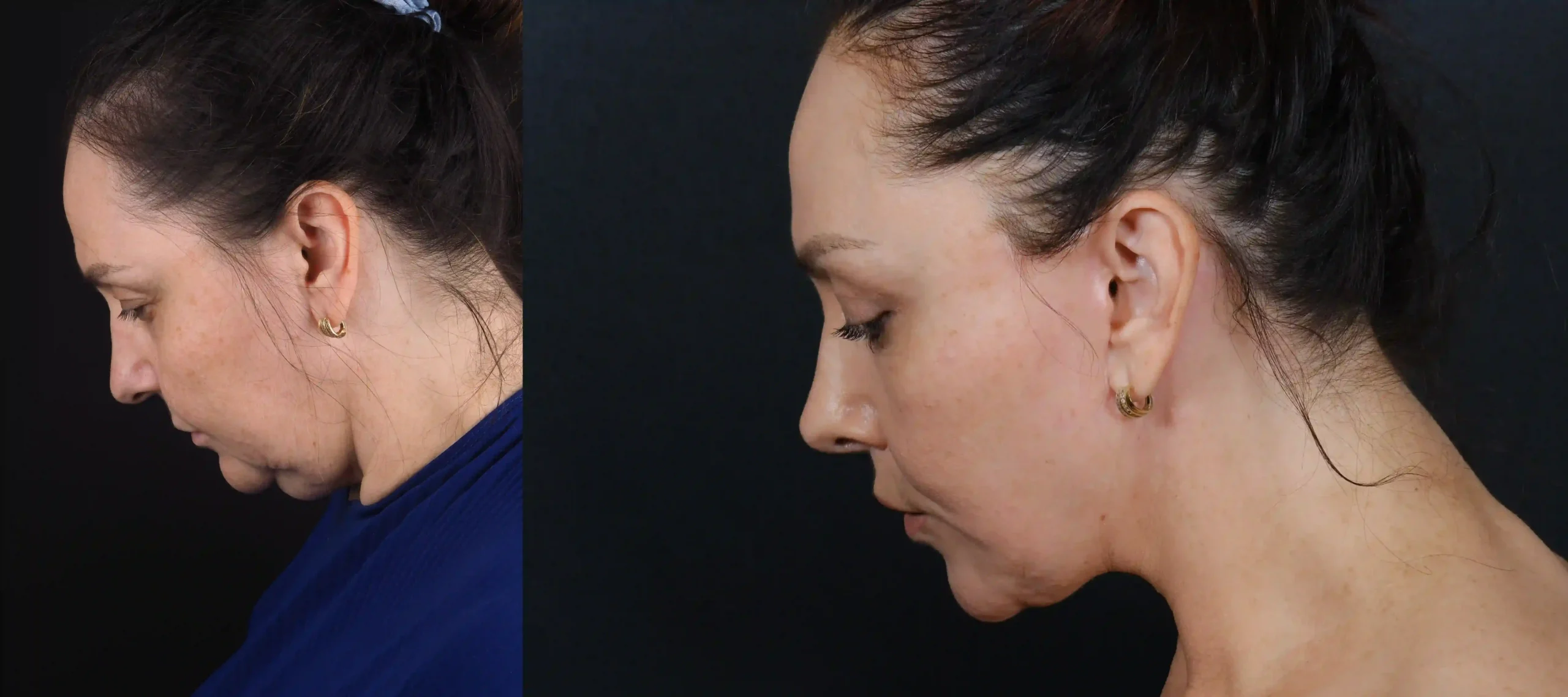
The male facelift is not simply a female facelift performed on a man. It requires different technique to preserve the sideburn hairline, avoid pulling hair-bearing skin into the ear, and maintain the strong, angular facial features that read as masculine. Modern male facelifts, particularly deep plane facelifts and starter facelifts for younger patients, address jowling, midface descent, and neck laxity while preserving the underlying facial character. For daddy do-over patients in their late 40s to 60s, a facial procedure is frequently the highest-impact intervention in the entire plan.
5. Eyelid Surgery (Blepharoplasty)
Upper eyelid heaviness and under-eye bags are two of the most reliable visual markers of ageing. Blepharoplasty removes excess skin from the upper eyelids and repositions or removes fat from the lower lids, producing a rested, more alert appearance. For men who feel their face looks tired despite adequate sleep, blepharoplasty is often the single most cost-effective procedure in a daddy do-over. Dr. Burak’s eyelid aesthetics page covers the technique.
6. Jawline Enhancement
A defined jawline reads as youthful, healthy, and masculine. Age-related loss of jawline definition, particularly the softening of the jaw-to-neck angle, is one of the most requested corrections in male aesthetic surgery. Options include mandibular angle implants, sliding genioplasty, chin augmentation, submental liposuction, or a combination of these depending on the specific anatomical variable driving the concern. For daddy do-over patients whose face is one of their primary concerns, jawline work is often included alongside a facelift or blepharoplasty.
7. Hair Restoration
Male pattern hair loss affects the majority of men to some degree by the age of 50. Modern hair restoration through FUE (follicular unit extraction) transplantation produces natural, dense results and is frequently included in a daddy do-over plan. Because hair transplantation is typically performed as a separate procedure on a different day, it is often coordinated within the same medical tourism trip rather than combined into the same surgical session as the body work.
8. Injectables and Skin Treatments
Non-surgical treatments are frequently added to a daddy do-over to refine the surgical result. These include botulinum toxin for dynamic wrinkles, dermal fillers for volume restoration in the temples and jawline, exosome therapy to accelerate post-procedure healing, and skin-quality treatments such as laser resurfacing. These are typically performed either at the front end of the trip (to prepare the skin) or at the back end (to finish the result).
Who Is a Good Candidate for a Daddy Do-Over?
The ideal daddy do-over candidate is not defined by age or by having children. Surgeons increasingly note that many patients seeking the procedure are not fathers at all — the phrase has become shorthand for any male patient combining multiple procedures for age or lifestyle-related restoration. The clinical criteria that matter are the following:
- **Good overall health:** Cardiovascular, respiratory, and metabolic health sufficient to safely tolerate combined-procedure surgery. Diabetes, hypertension, and cardiac conditions must be well-controlled.
- **Stable weight:** Ideally within 5-10 kg of the patient’s realistic long-term weight, sustained for at least six months. Significant weight change after surgery compromises results.
- **Non-smoker or willing to stop:** Smoking must be stopped at least four to six weeks before surgery and remain stopped for four weeks after. This is non-negotiable for combined procedures because of the impact on wound healing.
- **Realistic expectations:** Understanding that the goal is a refreshed, more athletic, more youthful version of the patient — not a transformation into someone else.
- **Appropriate recovery capacity:** Sufficient time off work, adequate home support during the initial recovery phase, and willingness to comply with post-operative restrictions.
- **Specific anatomical concerns:** Concrete, identifiable features (excess flank fat, gynecomastia, jowling, upper eyelid heaviness) rather than a vague desire to look better.
Patients who do not meet several of these criteria are typically better served by staging procedures over multiple trips, choosing fewer procedures, or optimising health and weight before proceeding.
Which Combinations Actually Work in a Single Surgical Session?
This is the section most competitor articles avoid. Not every combination that sounds appealing on paper is safe or advisable in one operative session. Total surgical time, anesthesia exposure, blood loss risk, and post-operative recovery burden all compound as procedures are added. The following are the combinations that work well together in one session, and the combinations that are typically better staged.
Combinations that pair naturally in one session
- **Liposuction (multiple areas) + gynecomastia:** Both are torso-focused, both use similar technique, and combining them typically adds only 30-60 minutes to total operative time.
- **Facelift + blepharoplasty:** Facial procedures that share operative field, anaesthesia, and recovery. Almost always combined when both are indicated.
- **Blepharoplasty + jawline work (implants or genioplasty):** Facial procedures that address different anatomical zones without significantly extending recovery.
- **Liposuction + jawline liposuction / submental liposuction:** Body and neck contouring combine efficiently and share a single recovery.
- **Tummy tuck + limited liposuction:** Standard combination when abdominal skin and adjacent flank fat both need addressing.
Combinations that are typically better staged
- **Tummy tuck + full-body liposuction + facelift:** Total operative time and combined recovery burden become excessive. Staging the facial work as a second trip is safer and produces better results.
- **Tummy tuck + gynecomastia + facelift:** Same principle. Torso and face work are often best split across two trips six to twelve weeks apart.
- **Any combined procedure + hair transplantation:** Hair transplantation is usually scheduled as a separate day within the same medical tourism trip, not combined into the same surgical session.
The judgement call always defaults to patient safety. A surgeon who agrees to combine every procedure a patient requests without discussing staging is not applying appropriate clinical judgement. A responsible daddy do-over is often shorter, not longer, than what the patient initially imagines.
| 🩺 Dr. Burak’s Clinical Note “For international patients specifically, the temptation to combine more procedures into one trip is real. They are on a plane anyway; the accommodation is booked; time off work is arranged. But the surgical calendar has to respect the physiological limits, not the travel schedule. When I recommend staging, I explain exactly why, and I offer to plan the second stage on a defined timeline so the patient can arrange their next trip. Combining safely is what protects both the result and the patient.” |
Combining Procedures in Istanbul: The 10-14 Day Medical Tourism Plan
The reason Istanbul has become a leading destination for combination male surgery is that the entire multi-procedure journey can be delivered inside a single, well-managed trip. Turkey ranks in the top tier globally for aesthetic surgical volume per ISAPS data, hospitals such as Pendik Medical Park (where Dr. Burak operates) are JCI-accredited, and the total cost of a daddy do-over combination in Istanbul is typically 40-60% lower than the equivalent package in the UK, the US, or Australia.
A standard daddy do-over trip typically follows this shape:
- **Days 1-2:** Arrival, in-person consultation, final surgical planning, pre-operative bloodwork and imaging.
- **Day 3:** Surgery day. Hospital admission, procedure(s) performed under general anaesthesia, overnight monitoring.
- **Days 4-5:** Hospital observation, drain and dressing management if applicable, discharge to hotel.
- **Days 6-9:** Hotel-based recovery with WhatsApp check-ins from the medical team, follow-up appointments as scheduled.
- **Days 10-12:** Suture removal, final in-person review, clearance for return flight.
- **Days 13-14:** Return travel, transitioning to home-based recovery with continued WhatsApp support.
For patients combining more extensive procedures (tummy tuck plus liposuction plus gynecomastia, for example), the trip extends to 14-16 days. For patients including facial work alongside body work, the same or slightly longer window applies. The specific timeline is confirmed at consultation based on the exact combination planned.
The credential to look for when selecting a surgeon in Turkey remains EBOPRAS certification, the European Board diploma held by Assoc. Prof. Dr. Burak Sercan Erçin alongside his Turkish Board certification and academic faculty position at Bahçeşehir University.
Recovery After a Daddy Do-Over
Recovery from a combined procedure follows the longest recovery timeline of the procedures included. If a patient combines liposuction (5-7 day social recovery), gynecomastia (7-10 days), and blepharoplasty (7-10 days), the overall recovery aligns with the longest of these. Compression garments, activity restrictions, and follow-up scheduling are managed as a coordinated plan rather than three separate protocols.
Return to sedentary work is typically possible at 10-14 days for most combined procedures. Return to strenuous exercise and lifting is restricted for 6-8 weeks. Final aesthetic results, particularly for procedures involving swelling resolution such as liposuction or facelift, emerge over 3 to 6 months. Patients who followed the pre-operative optimisation guidance (stable weight, no smoking, good health) typically experience the smoothest recoveries.
Dr. Burak’s team provides WhatsApp-based post-operative support for international patients after they return home, with photograph review at agreed intervals to monitor healing and confirm return-to-activity milestones. For patients requiring in-person follow-up, a second brief trip at three or six months can be arranged when clinically indicated.
Frequently Asked Questions
What procedures are typically included in a daddy do-over?
Every daddy do-over is customised, but the most commonly included procedures are liposuction, gynecomastia surgery (male breast reduction), tummy tuck (abdominoplasty), male facelift, blepharoplasty (eyelid surgery), jawline enhancement, hair restoration, and injectables such as botulinum toxin or dermal fillers. The specific combination is chosen based on the patient’s anatomy, goals, and medical suitability.
Do I have to be a father to have a daddy do-over?
No. Surgeons who perform the procedure widely note that many patients are not fathers. The term has become shorthand for any male patient combining multiple procedures to address age or lifestyle-related physical changes. What matters clinically is candidacy and the presence of specific concerns that combined surgery can address, not parental status.
How long does daddy do-over surgery take?
Total operative time depends on the specific combination. A moderate combination (liposuction plus gynecomastia, for example) typically takes 2-3 hours. A more extensive combination (tummy tuck plus liposuction plus another procedure) can extend to 5-6 hours or more. Any single-session surgery exceeding 6-7 hours is typically reviewed carefully for safety, and staging is discussed with the patient.
Can I combine facial and body procedures in one trip?
Yes, in many cases, though not always in a single surgical session. A common approach for international patients is to combine body procedures (liposuction, gynecomastia, tummy tuck) in one operative session and add facial procedures (facelift, blepharoplasty, injectables) either in the same trip on a separate day or in a staged second trip. The specific plan depends on total operative time, patient recovery capacity, and the length of the medical tourism trip.
How much does a daddy do-over cost in Turkey compared to the US?
A comprehensive daddy do-over combination in the US typically costs $30,000-60,000 depending on the specific procedures included. The equivalent combination in Istanbul, performed by an EBOPRAS-certified surgeon at a JCI-accredited hospital, is typically 40-60% lower, plus travel and accommodation. Precise pricing is discussed at consultation because it depends entirely on the specific combination of procedures planned.
Does Dr. Burak specialise in male aesthetic surgery?
Yes. Dr. Burak’s practice includes a substantial male aesthetic caseload spanning body contouring, facial rejuvenation, gynecomastia, and combined-procedure planning. His reconstructive and craniofacial background is directly relevant to combined-procedure male surgery, where anatomical precision and multi-zone planning define the outcome. Consultations for international patients begin online via WhatsApp or video call. Visit the contact page or reach out via WhatsApp.
The Male Multi-Procedure Trip, Done Properly
The daddy do-over is the direct male answer to a question the mommy makeover has answered for two decades: how do you address multiple related concerns in a single, coordinated surgical trip rather than spreading them across years of interrupted recovery and repeated travel? For men in demanding careers, with families, or with limited time to step away from responsibilities, the compressed approach is not a luxury; it is often the only practical way the procedures actually happen.
For international patients considering a daddy do-over in Istanbul, the value proposition is real: genuine surgical expertise, JCI-accredited hospital standards, EBOPRAS credentials to verify, and a total cost that makes multi-procedure combination surgery accessible to patients for whom the US or UK equivalent would be out of reach. What matters most is finding a surgeon who will design the plan properly — combining what should be combined, staging what should be staged, and declining what should not be done at all.
Why Assoc. Prof. Dr. Burak Sercan Erçin
Dr. Burak Sercan Erçin is an Istanbul-based Plastic, Reconstructive and Aesthetic surgeon with more than 15 years of experience and over 6,000 operations. He holds both Turkish Board and EBOPRAS certifications, trained alongside reconstructive microsurgeon Dr. Pedro Cavadas, and serves as academic faculty at Bahçeşehir University. He practices at Pendik Medical Park, Istanbul. His combined reconstructive and aesthetic background is directly applicable to multi-procedure male surgery, where safe combination planning requires the same anatomical precision as reconstructive work. To discuss your case, book an online consultation or reach out via WhatsApp.
This content was written by Assoc. Prof. Dr. Burak Sercan Erçin in line with clinical experience and current medical literature. It is intended for general informational purposes only and does not constitute medical advice. A personal consultation with Dr. Erçin is recommended for individual assessment.
Faculty Member · Bahçeşehir University
Graduate of Ege University Faculty of Medicine, Assoc. Prof. Dr. Erçin completed advanced fellowships at Tampa General Hospital (USA) under Dr. Deniz Dayıcıoğlu in breast reconstruction and burn surgery, and at the clinic of Dr. Pedro Cavadas in Valencia, Spain in reconstructive microsurgery. After passing the EBOPRAS examination in 2018, he joined Bahçeşehir University as a faculty member and continues his private practice on Bağdat Avenue, Istanbul, specialising in face, breast and body aesthetics alongside complex reconstructive surgery.