This article was written by Assoc. Prof. Dr. Burak Sercan Erçin and is based on clinical experience. A specialist in Plastic, Reconstructive and Aesthetic Surgery; prepared in accordance with current medical literature and personal surgical data. A consultation is recommended before making any medical decisions.

Skinmaxxing has become one of the fastest-growing branches of the looksmaxxing movement in 2026. TikTok’s own platform data, reported by TIME magazine, logged more than 300,000 looksmaxxing-related searches per day in February 2026 and 1.9 million per day by March, with skinmaxxing content accounting for a substantial and still-climbing share of that volume. Unlike bonesmashing, mewing, or the harder-edge interventions covered elsewhere on the site, skinmaxxing is almost universally recognised by dermatologists and plastic surgeons as the single highest-return entry point into the looksmaxxing ecosystem. Done properly, it delivers visible results within weeks, costs comparatively little, carries no medical risk at the beginner level, and builds a foundation that every subsequent intervention depends on.
This guide, written from the perspective of Assoc. Prof. Dr. Burak Sercan Erçin, an EBOPRAS-certified plastic and reconstructive surgeon in Istanbul, explains what skinmaxxing is, where it sits in the broader looksmaxxing vocabulary already covered on this site, what a properly structured four-tier protocol looks like, and where the DIY routine stops and professional intervention earns its place. The piece is designed for readers who have arrived either from the looksmaxxing community looking to understand the skinmaxxing branch specifically, or from standard skincare research looking for an evidence-based approach written by a clinician rather than by a brand selling product.
What Skinmaxxing Actually Is
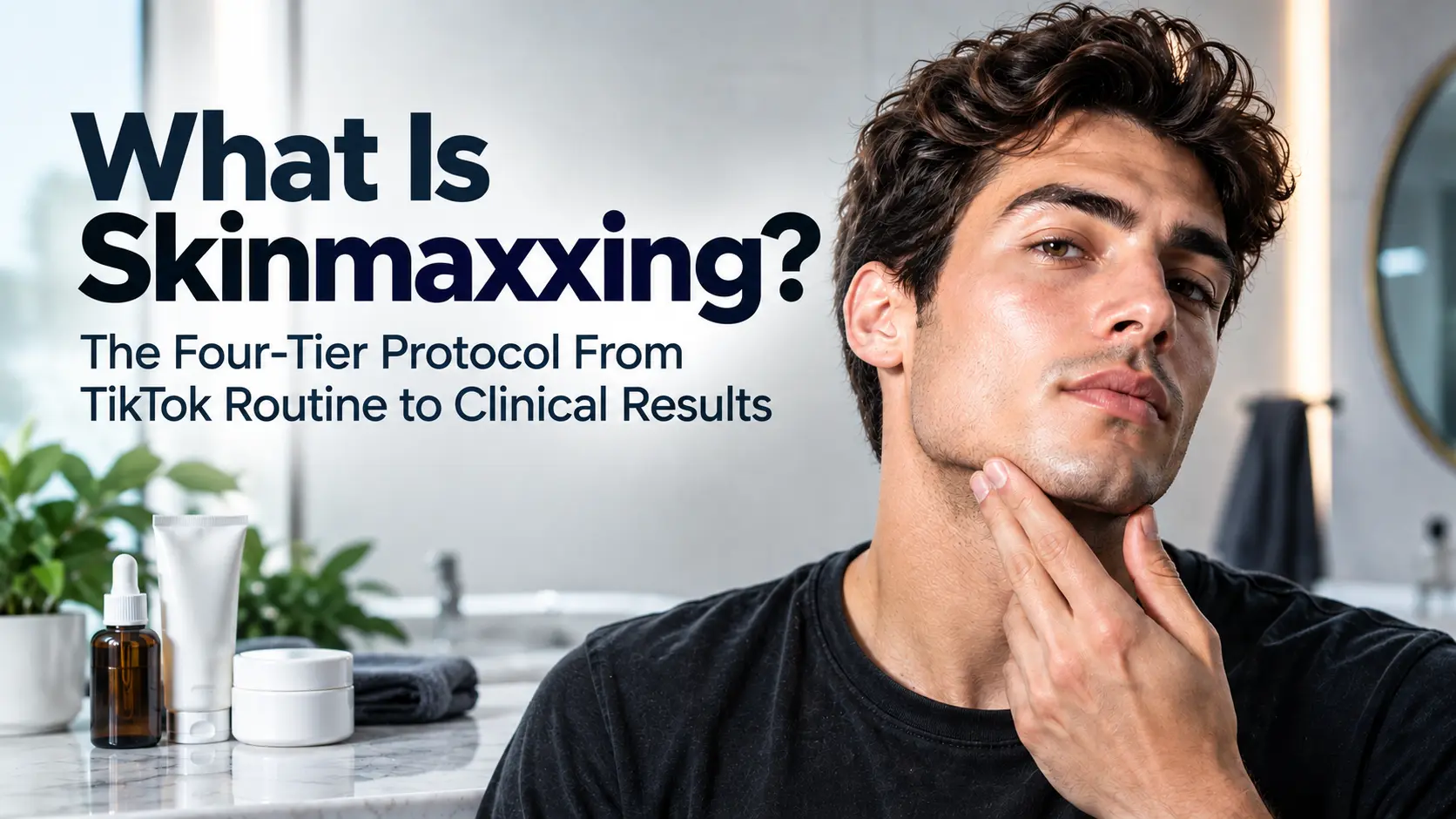
Skinmaxxing is the systematic optimisation of skin health and appearance — clarity, texture, tone, barrier function, and resilience — through a structured daily routine, strategic use of clinically studied active ingredients, and, at the advanced end, professional in-clinic interventions. The term originated on the same looksmaxxing forums and TikTok communities that produced the broader -maxxing vocabulary, but unlike several of its sibling trends, it describes a practice that is almost entirely consistent with mainstream dermatological consensus. The three fundamentals that every version of skinmaxxing comes back to are a daily cleanse, moisturisation of the skin barrier, and sun protection. Everything else is a stacked optimisation on top of that foundation.
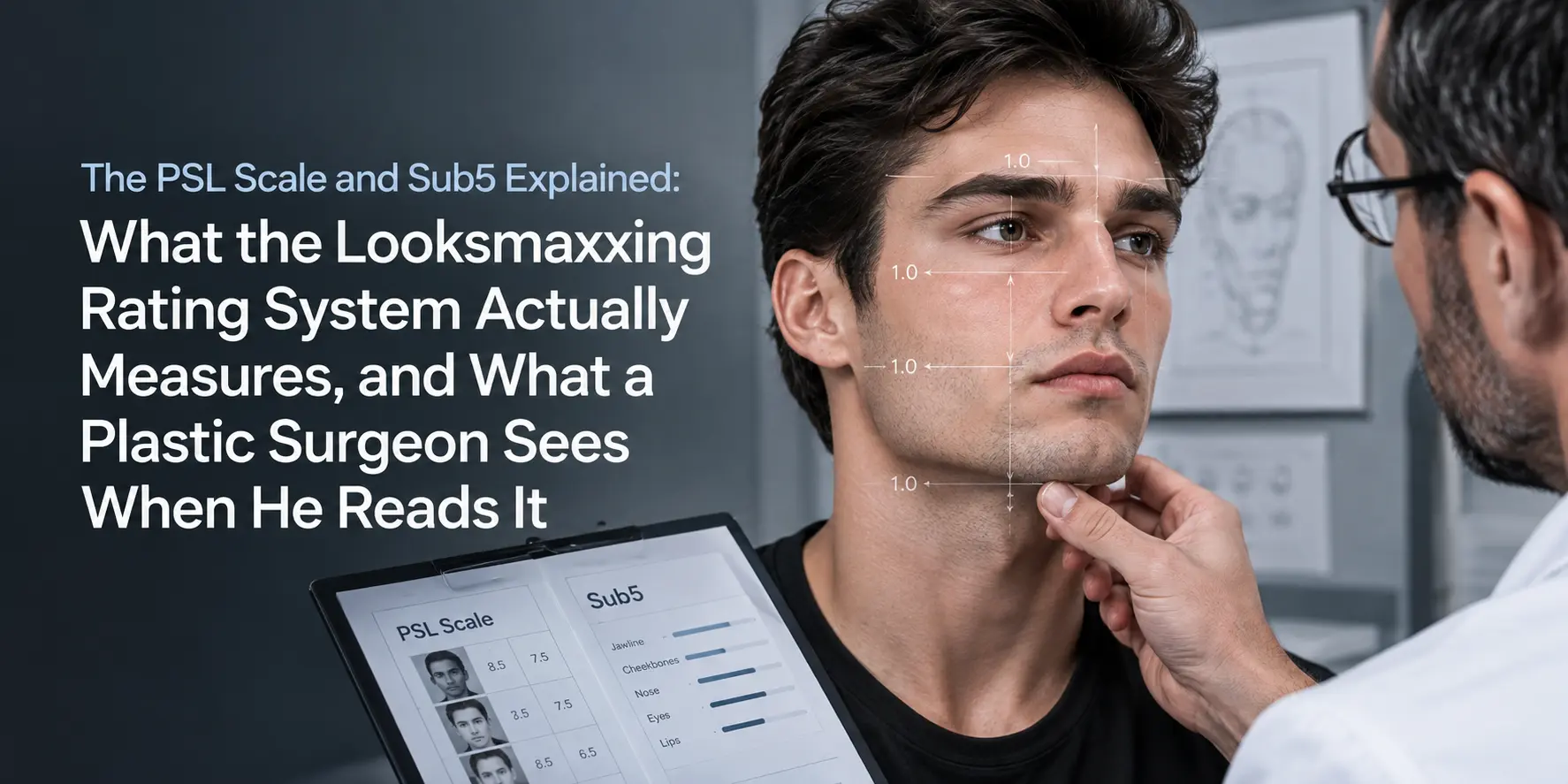
Skinmaxxing sits specifically within the softmaxxing branch of the looksmaxxing taxonomy. If you have read the site’s softmaxxing versus hardmaxxing guide, you already know the distinction: softmax interventions are low-risk, high-consistency, low-cost adjustments that produce real but incremental improvements through sustained effort, while hardmax interventions are surgical or structural changes that produce dramatic transformations through single interventions. Skinmaxxing is the clearest softmax win available to anyone. The site’s broader looksmaxxing and alpha male surgery hub places it in context alongside the full ecosystem of -maxxing interventions.

Why Skinmaxxing Is the Smartest Entry Point into the Entire Looksmaxxing Ecosystem
A reader arriving at the looksmaxxing conversation for the first time typically faces a wall of competing recommendations: start with jawline exercises, start with the gym, start with diet, start with facial surgery assessment, start with hair restoration. The honest answer from the plastic surgery side is that none of these matches skinmaxxing on return per unit of effort. Five reasons make the case:
- Visible results arrive fast: a properly executed Tier 1 routine produces measurable barrier improvement in four to six weeks, which is faster than any training programme, diet protocol, or surgical recovery.
- The downside is minimal: when done with gentle products and reasonable care, skinmaxxing carries essentially no medical risk, unlike the bonesmashing or jaw-exerciser interventions covered in the site’s [[https://buraksercanercin.co/blog/bonesmashing-jawline-trend/|bonesmashing guide]] and [[https://buraksercanercin.co/blog/jawzrsize-jaw-shapers/|Jawzrsize analysis]].
- The cost is accessible: a complete Tier 1 skinmaxxing kit costs less than a single restaurant dinner, with the ongoing monthly investment similarly modest.
- It builds the foundation every other intervention needs: skin quality determines how well surgical scars heal, how injectables settle, how laser treatments respond, and how the face reads at every age. Skinmaxxing is not an alternative to other interventions; it is the substrate on which the rest of the ecosystem performs or fails.
- The algorithm rewards it: in an era when the face is read, filtered, and shared constantly, visibly healthy skin produces a disproportionate return on social and professional perception.
A reader who has considered the hardmax end of the ecosystem — the surgical options covered in the site’s surgerymaxxing in Turkey guide, the limb lengthening pathway discussed in the heightmaxxing guide, or the female-side considerations in the boob-maxxing explainer — will often find that six months of properly structured skinmaxxing changes how they view the entire looksmax question. The decision becomes clearer when the baseline skin condition is no longer a confounding variable.
The Four-Tier Skinmaxxing Protocol
The dominant structure used by serious skinmaxxing resources is a tiered AM and PM protocol that progressively adds complexity as the skin barrier adapts and the patient’s commitment increases. The site’s version adds a fourth tier that mainstream skinmaxxing content does not cover: the clinical tier, where in-clinic procedures take over from DIY routine. The full four-tier structure looks like this:
| Tier | Who it is for | Core routine | Expected results |
|---|---|---|---|
| Tier 1: Beginner | Everyone starting from zero | Gentle cleanser AM/PM, moisturiser AM/PM, SPF 30+ every morning | Measurable improvement in skin barrier within 4 to 6 weeks |
| Tier 2: Intermediate | After 6 to 8 weeks of consistent Tier 1 | Tier 1 plus niacinamide serum AM, retinol or retinaldehyde PM 3 nights per week | Tone evening, pore refinement, early anti-ageing effects over 8 to 12 weeks |
| Tier 3: Advanced | After 3 to 6 months on Tier 2 with stable barrier | Tier 2 plus GHK-Cu copper peptide serum, vitamin C AM, controlled chemical exfoliation (AHA or BHA) once or twice weekly | Visible texture improvement, pigmentation reduction, firmer skin over 12 to 24 weeks |
| Tier 4: Clinical | When routine has reached its ceiling and the patient wants real structural change | In-clinic procedures: exosome therapy, polynucleotide skin boosters, chemical peels, laser resurfacing, microneedling with PRP | Structural skin remodelling: collagen induction, pigmentation clearance, laxity improvement over 3 to 12 months |
The critical principle across all four tiers is progression. Jumping straight to Tier 3 with multiple active ingredients before the barrier has adapted at Tier 1 and Tier 2 is one of the most common mistakes in community-driven skinmaxxing. It triggers barrier damage, over-exfoliation, and the counterintuitive outcome of worse skin than when the routine began. The slower progression works. The accelerated progression damages.
Tier 1: Beginner, the three-step foundation
Tier 1 is the version every ranking skinmaxxing article focuses on, and for good reason. Done consistently for four to eight weeks, it produces visible improvement for the majority of users with no further intervention required. The components are a gentle cleanser used morning and night, a moisturiser suited to the skin type (gel for oily, cream for dry, lotion for combination), and broad-spectrum SPF 30 or higher applied every morning, every day, including through cloud cover and indoor hours when near windows.
The cleanser does not need to be elaborate: a sulfate-free formulation that does not leave the skin feeling tight after rinsing meets the bar. The moisturiser’s role is to restore the skin’s natural barrier function after cleansing, and the single most important ingredient to look for is ceramides, followed by hyaluronic acid, glycerine, and squalane. The SPF matters more than every other product in the entire protocol combined: cumulative UV exposure is responsible for the majority of premature skin ageing worldwide, and daily SPF is the single most evidence-supported intervention in all of skincare.
Tier 2: Intermediate, introducing clinical actives
After six to eight weeks of consistent Tier 1 compliance and a stable, non-reactive skin barrier, Tier 2 introduces two actives: niacinamide in the morning for barrier support, oil regulation, and tone evening, and a retinoid (typically retinaldehyde or over-the-counter retinol) in the evening three nights per week for cell turnover acceleration and early anti-ageing effects. Retinoids are the most clinically studied anti-ageing ingredients outside prescription tretinoin, and they are the single most impactful addition the Tier 2 routine makes.
Starting the retinoid slowly matters. Three nights per week for the first four weeks allows the skin to adapt without the irritation, redness, and peeling that come from aggressive introduction. Buffering with a moisturiser applied before the retinoid can reduce irritation for sensitive skin. The improvement curve is non-linear: results become noticeable at eight to twelve weeks and continue to compound over months.
Tier 3: Advanced, the full active stack
Tier 3 is appropriate after three to six months on Tier 2 with a stable, well-functioning skin barrier. The additions at this tier are GHK-Cu copper peptide serum (which has consistent evidence for supporting collagen synthesis and tissue repair), vitamin C in the morning for antioxidant protection and pigmentation improvement, and controlled chemical exfoliation using AHAs (such as glycolic or lactic acid) or BHAs (such as salicylic acid) once or twice weekly. The combination of actives at this tier requires careful stacking because some ingredients conflict pharmacologically when applied at incompatible pH ranges or in the same routine step.
The over-stacking error is the most common Tier 3 mistake. More actives are not better. A single well-placed addition produces far more improvement than three poorly-chosen additions, and the barrier damage from over-stacking frequently reverses months of accumulated gains. The reader considering Tier 3 should either consult a qualified dermatologist for product selection or progress one active at a time with four to six weeks of adaptation between additions.
Tier 4: Clinical, where routine stops working
Tier 4 is the professional intervention tier, and it is the section mainstream skinmaxxing content does not cover because mainstream skinmaxxing content is written by skincare brands rather than clinicians. The honest observation from the plastic surgery side is that DIY skinmaxxing has a ceiling. For the majority of users, that ceiling is reached somewhere between six months and two years of consistent Tier 3 practice. Beyond that point, the structural interventions that genuinely remodel skin require in-clinic procedures that no over-the-counter product can replicate.
The interventions that typically make up the Tier 4 clinical skinmaxxing menu include the following, each addressed in the dedicated section below:
- Exosome therapy for cellular regeneration and skin quality enhancement, covered in the site’s dedicated [[https://buraksercanercin.co/blog/exosome-facials-therapy/|exosome facials therapy guide]].
- Polynucleotide skin boosters (such as PDRN-based injectable protocols) for deep hydration and biological skin remodelling.
- Chemical peels of varying depths (superficial, medium, or deep) for pigmentation, texture, and photo-damage correction.
- Fractional and non-fractional laser resurfacing for collagen induction, pigmentation clearance, and skin tightening.
- Microneedling with PRP (platelet-rich plasma) for collagen stimulation and scar remodelling.
- Volume restoration with carefully chosen biostimulating fillers, such as those discussed in the site’s [[https://buraksercanercin.co/blog/algeness-face-filler/|Algeness face filler guide]].
The right Tier 4 protocol is highly individual. Skin type, baseline condition, specific goals, downtime tolerance, and age all shape which combination of procedures produces the best result for a given patient. This is not a tier that benefits from DIY research alone.
The Clinical Tier in Depth: What In-Clinic Skinmaxxing Looks Like at an EBOPRAS-Credentialled Practice
This section is the one that no competing skinmaxxing article offers, because none of them is written by a plastic surgeon with access to the full range of in-clinic interventions. The procedures listed below are the ones that most frequently represent the next step for a reader who has reached the ceiling of DIY skinmaxxing and is ready to progress.
Exosome therapy
Exosomes are nanoscale extracellular vesicles that carry growth factors, proteins, and signalling molecules between cells. In an aesthetic skin context, exosome therapy delivers these regenerative messengers directly into the skin via microneedling or topical delivery, where they support fibroblast activity, collagen synthesis, and inflammation modulation. The procedure sits at the leading edge of regenerative aesthetic medicine in 2026 and is one of the most consistently requested additions to the Tier 4 skinmaxxing menu. The site’s detailed exosome facials therapy guide covers protocol, candidacy, and expected outcomes.
Polynucleotide skin boosters
Polynucleotide injectable protocols (often marketed under brand names such as Plinest, Newest, or Nucleofill) use fragments of DNA, typically derived from salmon or trout milt, to stimulate biological skin remodelling. The treatment produces improvements in hydration, elasticity, and overall skin quality through a mechanism distinct from traditional dermal fillers: it is not a volume-replacement procedure but a biological stimulator that works gradually over weeks following each session. For patients whose primary concern is skin quality rather than facial volume loss, polynucleotides are frequently the better answer.
Chemical peels
Peels remain one of the most versatile and cost-effective clinical skinmaxxing interventions. Superficial peels (glycolic acid, mandelic acid) address tone and texture with minimal downtime. Medium-depth peels (TCA at 20 to 35 percent concentration) address deeper pigmentation and early photo-damage with modest downtime. Deep peels (phenol-croton oil) produce dramatic resurfacing results with significant downtime and are reserved for selected patients with specific indications. Peel depth selection depends entirely on the specific skin concern being addressed.
Fractional and non-fractional laser resurfacing
Laser technology in 2026 covers a wide spectrum of indications. Non-ablative fractional lasers (such as fractional 1550nm) stimulate collagen with minimal downtime. Ablative fractional lasers (such as fractional CO2) produce more dramatic resurfacing with longer recovery. BBL and IPL target pigmentation and vascular lesions. Picosecond lasers address stubborn pigmentation that older technology struggles with. Selection of the right laser for the right patient is specialist territory and is not a decision to make from TikTok research.
Microneedling with PRP
Microneedling creates controlled microscopic channels in the skin to induce the body’s natural wound healing response and stimulate collagen synthesis. When combined with the patient’s own PRP (platelet-rich plasma, drawn from a small venous blood sample and concentrated in-clinic), the regenerative effect is amplified. Microneedling with PRP is one of the most accessible Tier 4 options in terms of downtime and cost, and it produces measurable improvement across a wide range of indications including scar remodelling, texture refinement, and overall skin quality enhancement.
Biostimulating fillers for Tier 4 volume support
Not every Tier 4 patient needs filler, but for patients whose skinmaxxing journey has reached a stage where volume loss has become the limiting factor, carefully chosen biostimulating fillers can produce improvement that no topical or microneedling intervention can match. The site’s Algeness face filler guide covers the specific case of fully biodegradable, agarose-based biostimulators that have gained ground in 2026 as a more natural-reading alternative to traditional hyaluronic acid fillers for selected indications.
View this post on Instagram Assoc. Prof. Dr. Burak Sercan Erçin Plastic, Reconstructive and Aesthetic SurgeryAvailable today6,000+ successful operations EBOPRAS certified ~15 min response timeInitial consultation is free · Your information is kept confidential under GDPR.
Where Skinmaxxing Fits Within the Broader Looksmaxxing Ecosystem
Skinmaxxing is one branch of a larger movement, and understanding how it relates to the other branches helps every reader decide where to focus their effort. The site has published a substantial library of content on the parallel branches of this ecosystem, and the honest answer for most readers considering any of them is that skinmaxxing should be in place first, as the softmax foundation on which harder interventions perform better.
- The parent framework is covered in the looksmaxxing and alpha male surgery hub, which maps the full ecosystem and the relationship between softmax and hardmax approaches.
- The soft-versus-hard distinction is detailed in the softmaxxing versus hardmaxxing guide, which is the natural companion piece to this article.
- For readers whose considerations extend into actual surgical intervention, the surgerymaxxing in Turkey guide covers the medical tourism pathway for combined face procedures.
- The female counterpart to the male-dominant looksmax conversation is addressed in the boob-maxxing guide, which closes the gender balance of the ecosystem.
- Height-specific interventions, including the orthopaedic limb lengthening pathway, are covered in the heightmaxxing guide.
- The high-risk DIY practice targeting jawline bone remodelling is addressed in the bonesmashing jawline trend guide.
- The tongue-posture technique with widely circulated claims that do not survive clinical scrutiny is covered in the mewing fact or myth guide.
- The jaw-exerciser product category, including the honest surgeon take on devices like the Jawzrsize, is addressed in the Jawzrsize guide.
- The facial-proportion anchor used across the looksmax community to assess midface balance is explained in the midface ratio guide.
A reader who has read even half of the pieces above will understand why skinmaxxing is positioned as the foundational intervention. Every other -maxxing branch depends on skin quality to look its best, and starting the ecosystem journey anywhere other than skinmaxxing is a sequencing error that produces inferior aggregate results.
The Common Skinmaxxing Mistakes That Set the Barrier Back
The TikTok-driven skinmaxxing conversation produces a predictable set of mistakes that undo the gains the beginner routine was designed to produce. The six most common errors to avoid:
- Over-exfoliation: using chemical exfoliants more than two or three times per week, or stacking AHA with retinol in the same evening, is the fastest route to a damaged barrier.
- Starting too many actives at once: adding niacinamide, retinol, vitamin C, and GHK-Cu to a routine simultaneously produces barrier reactivity, not accelerated results.
- Skipping the moisturiser: a routine that cleanses but does not moisturise damages the barrier it is supposed to protect, regardless of how expensive the cleanser is.
- Treating SPF as optional: cumulative UV exposure undoes every Tier 2 and Tier 3 benefit, and a routine without daily SPF is a routine that is losing ground, not gaining it.
- Chasing viral products: a reel showing dramatic before-and-after results after a single product application is almost always deceptive. Real skinmaxxing results compound over weeks to months, not days.
- Jumping to Tier 4 without a baseline: patients who book in-clinic procedures while their barrier is damaged and their SPF compliance is zero get inferior results and face longer recovery than patients who establish a Tier 1 to Tier 2 baseline first.
The Realistic Skinmaxxing Timeline
The visible progression of a properly structured skinmaxxing journey is predictable enough to be worth setting out explicitly. Setting expectations correctly avoids the two most common reasons people quit the routine before it has had time to work.
- Weeks 1 to 4: skin barrier stabilisation, reduced reactivity, early improvement in hydration and feel. Visible changes modest at this stage.
- Weeks 4 to 8: visible improvement in overall tone and clarity, reduced appearance of pores, early firming effects for patients on Tier 2.
- Weeks 8 to 16: compounding improvements in texture, tone, and radiance. Pigmentation starts to lighten. Fine lines appear softer.
- Months 4 to 6: the maximum DIY ceiling begins to approach for most patients, with cumulative improvement in all measurable dimensions. Many patients at this stage become candidates for Tier 4 if they want to continue progressing.
- Months 6 to 12 (with Tier 4 integration): structural skin remodelling, visible firming, pigmentation clearance, and overall improvement that would not have been achievable with topical routine alone.
Frequently Asked Questions
What is skinmaxxing?
Skinmaxxing is the systematic optimisation of skin health, texture, tone, barrier function, and overall appearance through a structured daily routine, strategic use of clinically studied active ingredients, and, at the advanced end, in-clinic procedures. It sits inside the broader softmaxxing branch of the looksmaxxing movement and is widely considered the single highest-return entry point into that ecosystem.
Is skinmaxxing just skincare?
At the beginner level, yes: skinmaxxing is essentially a disciplined, consistent skincare routine with specific attention to the three fundamentals of cleansing, moisturising, and sun protection. At the intermediate and advanced tiers, it incorporates clinically studied active ingredients. At the clinical tier, it extends into in-clinic procedures such as exosome therapy, polynucleotide skin boosters, chemical peels, laser resurfacing, and microneedling with PRP that no over-the-counter product can replicate.
What is the best skinmaxxing routine for a beginner?
The best beginner routine is the simplest one followed consistently. Three steps are enough: a gentle sulfate-free cleanser used morning and night, a ceramide-based moisturiser suited to the specific skin type, and broad-spectrum SPF 30 or higher applied every morning without exception. Four to six weeks of consistent Tier 1 compliance produces measurable improvement in skin barrier function and overall quality before any active ingredients need to be added.
How long does skinmaxxing take to show results?
Visible improvement in skin barrier function and hydration arrives within four to six weeks of consistent Tier 1 compliance. Tone and texture improvement typically emerges at eight to twelve weeks with Tier 2 additions. Advanced structural changes (reduction in pigmentation, firmness, fine line softening) accumulate over three to six months on the full Tier 3 protocol. The timeline is non-linear and compounds over time, which is why the slow progression works better than the aggressive one.
When should I move from DIY skinmaxxing to in-clinic procedures?
The right time to consider the Tier 4 clinical interventions is after three to six months of consistent Tier 3 practice when visible progress has started to plateau and the patient wants to continue advancing beyond what topical products can achieve. Jumping to Tier 4 before establishing a baseline routine is a sequencing error that produces inferior results and often requires longer recovery than well-prepared skin would need.
Does Dr. Burak offer clinical skinmaxxing treatments?
Yes. Dr. Burak’s practice includes the full Tier 4 clinical skinmaxxing menu covered in the section above, with each protocol individually tailored to the patient’s skin type, baseline condition, specific goals, and downtime tolerance. Initial assessment for international patients begins online via WhatsApp or video call, with in-person treatment confirmed on arrival in Istanbul. Visit the contact page or reach out via WhatsApp.
A Routine Is the Baseline, Not the Ceiling
Skinmaxxing is one of the few corners of the looksmaxxing conversation that genuinely delivers on its promises for the majority of people who commit to it properly. The returns on four to six weeks of consistent beginner routine are real, measurable, and almost universally positive. The returns on three to six months of intermediate and advanced practice are even more substantial. And for patients who reach the ceiling of what DIY practice can achieve, the Tier 4 clinical interventions covered above open a second phase of improvement that routine alone cannot match.
For international patients considering the Tier 4 pathway specifically, the value proposition of Istanbul is the same one that has made the city a leading destination across the rest of the aesthetic and reconstructive spectrum: specialist expertise at JCI-accredited facilities, cost accessibility, EBOPRAS credentials to verify, and the kind of unhurried consultation that starts with a proper skin assessment rather than a sales pitch. The pathway from TikTok routine to clinical result does not need to be rushed, and in most cases it should not be.
Why Assoc. Prof. Dr. Burak Sercan Erçin
Dr. Burak Sercan Erçin is an Istanbul-based Plastic, Reconstructive and Aesthetic surgeon with more than 15 years of experience and over 6,000 operations. He holds both Turkish Board and EBOPRAS certifications, trained alongside reconstructive microsurgeon Dr. Pedro Cavadas, and serves as academic faculty at Bahçeşehir University. He practices at Pendik Medical Park, Istanbul. His approach to the skinmaxxing journey mirrors his broader clinical philosophy: establish the baseline first, add complexity only when the barrier is stable, and progress to clinical intervention only when the routine has reached its honest ceiling. To discuss your case, book an online consultation or reach out via WhatsApp.
This content was written by Assoc. Prof. Dr. Burak Sercan Erçin in line with clinical experience and current medical literature. It is intended for general informational purposes only and does not constitute medical advice. A personal consultation with Dr. Erçin is recommended for individual assessment.
Faculty Member · Bahçeşehir University
Graduate of Ege University Faculty of Medicine, Assoc. Prof. Dr. Erçin completed advanced fellowships at Tampa General Hospital (USA) under Dr. Deniz Dayıcıoğlu in breast reconstruction and burn surgery, and at the clinic of Dr. Pedro Cavadas in Valencia, Spain in reconstructive microsurgery. After passing the EBOPRAS examination in 2018, he joined Bahçeşehir University as a faculty member and continues his private practice on Bağdat Avenue, Istanbul, specialising in face, breast and body aesthetics alongside complex reconstructive surgery.